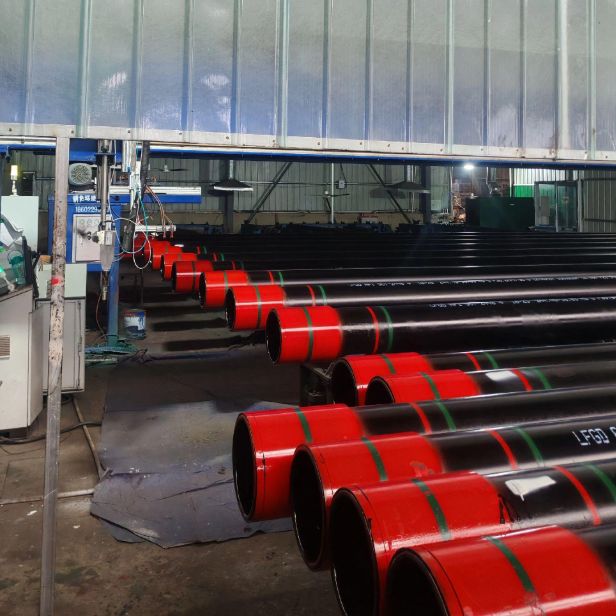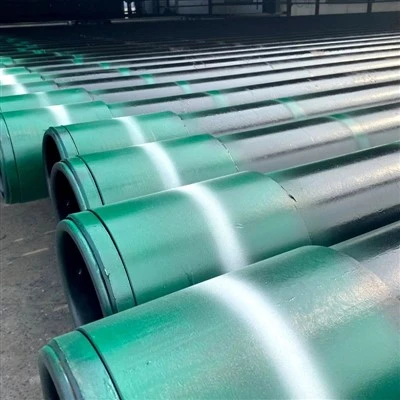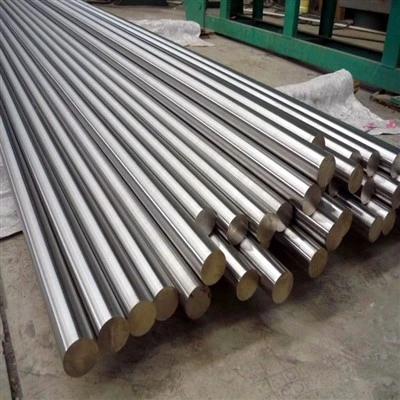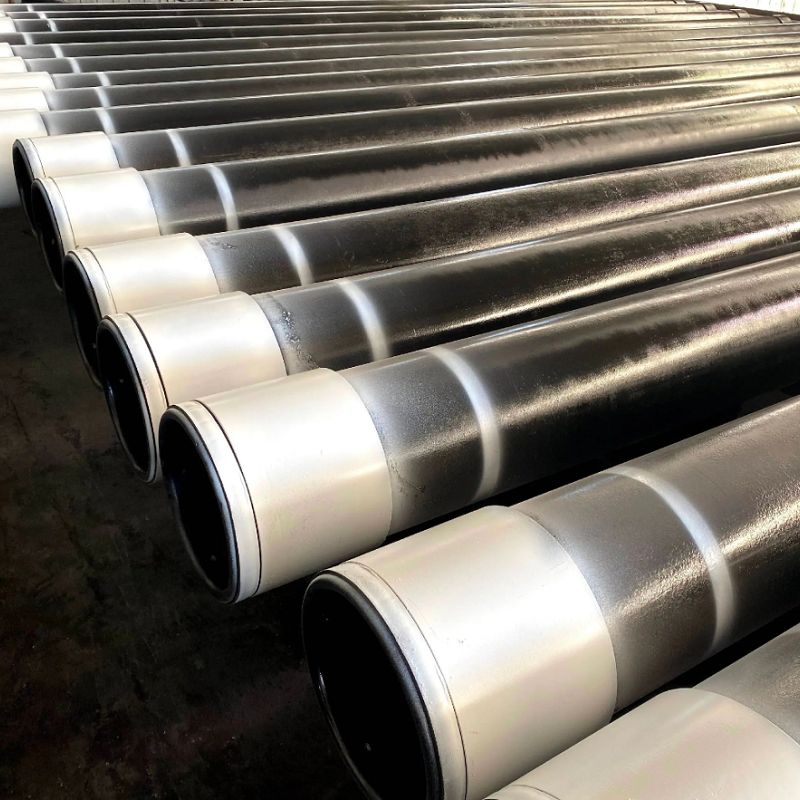
Products Features

High strength matched with good toughness (core advantage)
The core advantage of API 5CT P110 lies in the balance between its high strength and good toughness. Thanks to the quenching and tempering heat treatment process, P110 maintains a minimum yield strength of 758 MPa and a minimum tensile strength of 862 MPa while still possessing good impact toughness. Its yield strength is higher than that of N80 (552 MPa) and L80 (552 MPa), making it suitable for deep wells, ultra-deep wells, and high-pressure wells. It is an economical and efficient choice for high-pressure oil and gas wells.
|
Performance indicators |
PSL1 Requirements |
PSL2 Requirements |
|
Minimum Yield Strength (MPa) |
758 |
758 |
|
Maximum Yield Strength (MPa) |
965 |
965 |
|
Minimum Tensile Strength (MPa) |
862 |
862 |
|
Maximum Tensile Strength (MPa) |
- |
- |
|
Yield strength ratio |
Usually ≤ 0.90 |
Usually ≤ 0.90 |
|
Elongation |
Determined by lookup formula per API Spec 5CT |
Determined by lookup formula per API Spec 5CT |
Note: The strength level of P110 is higher than that of J55, K55, N80, N80Q, and L80. It is the highest commonly used steel grade in API 5CT, excluding Q125. For acidic environments containing H₂S, P110 is not recommended. Instead, C90, T95, or corrosion-resistant alloys are suggested.

Good welding performance (core requirement for casing and tubing)
The carbon equivalent design of API 5CT P110 ensures good welding performance, which is a fundamental requirement for field construction and coupling welding of oil casing. The carbon content of P110 is typically controlled to ≤ 0.35%, and the manganese content to ≤ 1.60%, ensuring good toughness and resistance to cold cracking in the heat-affected zone under field welding conditions.
Key Welding Points:
- Moderate CE value:
Reduces the tendency for hardening in the welding heat-affected zone and lowers the risk of cold cracks
- Control of harmful elements:
The contents of P and S are controlled within conventional ranges to ensure the purity of the weld and base metal.
- Suitable for various welding methods:
Seamless pipe butt welding, with good field ring welding performance
For the P110 grade, the upper limit of carbon content is relatively wide (≤ 0.35%), and preheating to 100–150°C is recommended during welding.
This is practical engineering reference value. No mandatory pre heating temperature specified by API standard. Actual value shall follow WPS (Welding Procedure Specification).
For thick-walled pipes or high-restraint joints, it is advisable to appropriately increase the preheating temperature. Note: After welding P110, hardness control is required, and it is not recommended for use in acidic environments.

Good toughness and resistance to brittle fracture
API 5CT P110 PSL2 requires Charpy V-notch impact testing to ensure the material's resistance to brittle fracture under service conditions. The tempered martensitic microstructure obtained through quenching and tempering heat treatment of P110 significantly enhances its toughness, enabling P110 oil casing to be reliably applied in deep well and high-pressure well environments.
Typical impact toughness indicator (PSL2):
- Test Temperature: Typically 0°C or lower (as per user requirements)
- Minimum impact energy: ≥ 27 J (average) / ≥ 20 J (individual value)

Good corrosion resistance and environmental adaptability
API 5CT P110 exhibits good resistance to uniform corrosion in normal atmospheric, fresh water, soil, and oil and gas media. For acidic service environments containing H₂S, P110 is not recommended; instead, sulfur-resistant steel grades such as C90, T95, or 13Cr should be selected. For environments containing CO₂, 13Cr series can be evaluated or selected based on specific operating conditions.
Good cold bending and processing performance
API 5CT P110 has a moderate carbon content and a moderate yield-to-tensile ratio (typically ≤ 0.90 for PSL2), which gives it good cold bending formability. It is suitable for cold-bent pipe production and can be used to manufacture hot-bent elbows through hot bending processes. In terms of end processing, P110 oil country tubular goods can undergo thread rolling, upsetting, beveling, and other processes to meet the API 5CT standard requirements for threads and couplings.
Technical Specification
Chemical Composition(API Spec 5CT / ISO 11960)
|
Element |
PSL1 |
PSL2 |
Note |
|
C |
≤ 0.35% |
≤ 0.35% |
Carbon content control to ensure weldability |
|
Mn |
≤ 1.60% |
≤ 1.60% |
Solid solution strengthening, improve strength |
|
P |
≤ 0.030% |
≤ 0.030% |
Harmful elements, strictly controlled |
|
S |
≤ 0.030% |
≤ 0.030% |
Harmful elements, strictly controlled |
|
Si |
≤ 0.45% |
≤ 0.45% |
Deoxidizer, improve strength |
|
CEIIW |
- |
≤ 0.45% |
Carbon equivalent, controlling weldability |
Physical Properties
|
Property |
Value/Range |
Test Conditions |
|
Density |
≈ 7.85 g/cm³ |
Room Temperature (20°C) |
|
Melting Point |
≈ 1420–1460℃ |
--- |
|
Elastic modulus |
≈ 207 GPa |
Room Temperature |
|
Thermal Conductivity |
≈ 50 W/(m·K) |
Room Temperature |
|
Coefficient of Thermal Expansion (20-100°C) |
≈ 11.5 × 10⁻⁶ /K |
--- |
|
Poisson's ratio |
≈ 0.28 |
Room Temperature |
Mechanical Properties (Typical value)
|
Performance |
PSL1 |
PSL2 |
Implementation standards |
|
Minimum Yield Strength |
758 MPa |
758 MPa |
API Spec 5CT / ISO 11960 |
|
Maximum Yield Strength |
965 MPa |
965 MPa |
API Spec 5CT / ISO 11960 |
|
Minimum Tensile Strength |
862 MPa |
862 MPa |
API Spec 5CT / ISO 11960 |
|
Maximum Tensile Strength |
- |
- |
API Spec 5CT / ISO 11960 |
|
Elongation |
Determined by lookup formula per API Spec 5CT |
Determined by lookup formula per API Spec 5CT |
API Spec 5CT |
Note: The 'P110' in API 5CT P110 indicates a minimum yield strength of 110,000 psi (approximately 758 MPa), with the number representing thousands of pounds per square inch (ksi). The actual yield strength of the pipe typically ranges from 758 to 965 MPa, and the tensile strength ranges from 862 to 1000 MPa.
Applicable Media
1. Oil and Natural Gas:
Oil tubes, casing, and couplings for deep wells and ultra-deep wells
2. High-pressure oil and gas wells:
Deep wells, ultra-deep wells, high-pressure wells
Note: API 5CT P110 is not suitable for acidic oil and gas environments containing H₂S. In acidic environments, API 5CT sour-resistant steel grades (such as C90, T95) or corrosion-resistant alloys (e.g., 13Cr, 22Cr) should be selected.
Product Form and Manufacturing Process
Seamless steel pipe (Seamless)
• Process: Hot Rolling Piercing + Rolling Extension + Quenching and Tempering Heat Treatment (Quenching + Tempering)
• Outer Diameter Range: 114.3–508 mm (4-1/2"–20")
• Wall thickness range: 5.21–16.13 mm
• Features: Seamless, high pressure-bearing capacity, suitable for deep wells and high-pressure oil and gas wells
• Typical applications: downhole tubing & casing for deep / ultra deep wells; downhole wellhead connector components
Straight Seam High-Frequency Resistance Welded Pipe (ERW-P110): This product can only be supplied when the contract explicitly enables API 5CT SR11 supplementary requirements. It is not part of the standard supply scope, and prior to ordering, it must be confirmed whether the owner accepts this manufacturing process.
Applicable Standards and Delivery Condition
• Standard: API Spec 5CT,ISO 11960,GB/T 19830
• Product Specification Level: PSL1 (Basic Level), PSL2 (Enhanced Level)
• Delivery Status: Tempered (Quenching + Tempering)
• End Processing: Flat Ends, Beveled Ends, Threaded Ends (STC, LTC, BTC), Special Fitting Ends
• Certificate: When complying with PSL2 requirements, a compliance certificate (SR15.1 mandatory)
Heat Treatment System and Welding Key Points
The final performance of API 5CT P110 depends on the tempering heat treatment process:
1. Tempering treatment (quenching + tempering, used to obtain tempered martensite microstructure)
Austenitize by heating to 850–950°C, followed by water quenching or oil quenching, then temper at 550–650°C for 1–2 hours. A uniform tempered martensite microstructure is obtained, ensuring a balance of strength and toughness.
2. Post-weld heat treatment (if required)
If stress relief is required after pipe ring weld welding, post-weld heat treatment at 550–650°C for 1–2 hours can be performed. Post-weld heat treatment should pay attention to controlling the heating and cooling rates to avoid affecting the microstructure and properties of the base material.
Important Reminder:
• In conventional oil and gas transmission environments without H₂S, stress relief heat treatment is typically not required after welding.
• P110 is not recommended for use in acidic environments containing H₂S; instead, sulfide-resistant steel grades (C90, T95) should be selected.
• During welding, strict control of heat input and interpass temperature is required to prevent grain coarsening in the heat-affected zone and excessive hardness.
API 5CT P110 is suitable for oil tubes, casing, and couplings in deep wells and ultra-deep wells, and is recommended for the following range:
Application Fields
-
Oil and Natural Gas Drilling
• Ultra deep well downhole tubing and casing
• High-pressure oil and gas wells
• Deep well /ultra deep well downhole tubing and casing
• High pressure oil & gas well completion & production operations
Delivery and Customization
We offer flexible and reliable supply chain solutions to ensure you receive API 5CT P110 oil casing that perfectly matches your project requirements.
Customizable Material Forms
We support producing various basic and special shapes according to drawings or specifications.
|
Form |
Seamless Pipe
|
|---|---|
|
Conventional Range |
Outer diameter: 114.3–508 mm; Wall thickness: 5.21–16.13 mm |
|
Customization Capability |
Hot-rolled seamless pipes, fixed-length cutting, bevel processing, pipe end threads, special heat treatment conditions |
Why Choose Us? - Reliable Engineering Technology. Dependable Delivery.
We are not just a supplier, but a trusted materials partner for you in China.
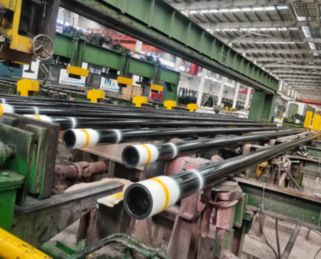
Vertically Integrated Production
Own 20,000㎡ facility with 10+ automated lines (8,000+ tons/year). In-house tooling & die center enables rapid customization and effective cost control - no middleman markup.
Strict Quality Control at Every Stage
Full traceability across key QC checkpoints throughout production. 100% compliant with ASTM/ASME, EN, and GB standards. Material test reports available with every shipment.
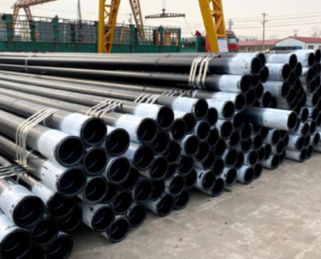
Reliable Delivery & Export Packaging
10+ years exporting to Europe, North America, Southeast Asia & Middle East with waterproof and anti-rust protection. Flexible logistics solutions are available to ensure safe and on time delivery.
Sample Validation Before Mass Production
We provide free samples for quality verification, allowing you to place bulk orders only after approval. We ensure consistency from sample to mass production by accurate dimensional measurement and transparent manufacturing.
Summary of Core Advantages
High Strength Matched With Good Toughness
Minimum yield strength of 758 MPa, minimum tensile strength of 862 MPa, along with excellent impact toughness, making it suitable for deep well and high-pressure well environments.
Tempering Treatment For Superior Toughness
P110 adopts quenching and tempering process, featuring uniform tempered martensite structure and good toughness.
Good welding performance
Designed with a moderate carbon equivalent (CEIIW ≤ 0.45), it exhibits excellent field ring welding construction performance. The toughness and resistance to cold cracking in the heat-affected zone of the weld are good.
High Cost-Performance
P110 is the main grade of high-strength API 5CT. It offers high strength and cost-effectiveness, making it an economical and efficient choice for deep wells and ultra-deep wells.
Diverse Product Forms
Regular supply is seamless steel pipe per API 5CT, with outer diameter ranging from 114.3 508 mm.
Compliant With Multiple International Standards
API Spec 5CT, ISO 11960, GB/T 19830, etc.
FAQ
Q: What is the difference between API 5CT P110 PSL1 and PSL2? How to choose between them?
Q: What are the differences between API 5CT J55, K55, N80-1, N80Q, L80-1and P110? How to choose?
Q: What is the maximum operating temperature for API 5CT P110?
Q: What is the welding performance of API 5CT P110?
Q: What is the corrosion resistance of API 5CT P110?
Q: Can API 5CT P110 replace ASTM A53 or J55?
Hot Tags: api 5ct p110, China api 5ct p110 manufacturers, suppliers, factory