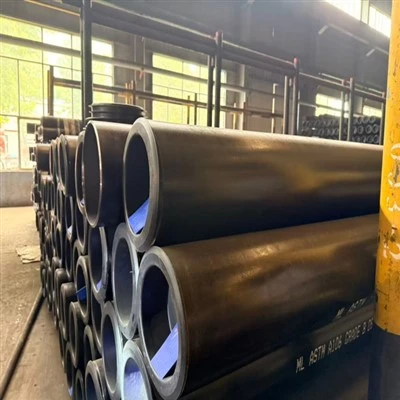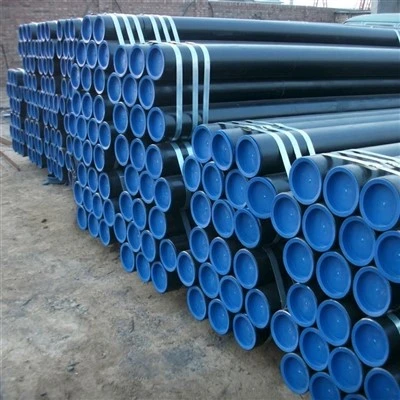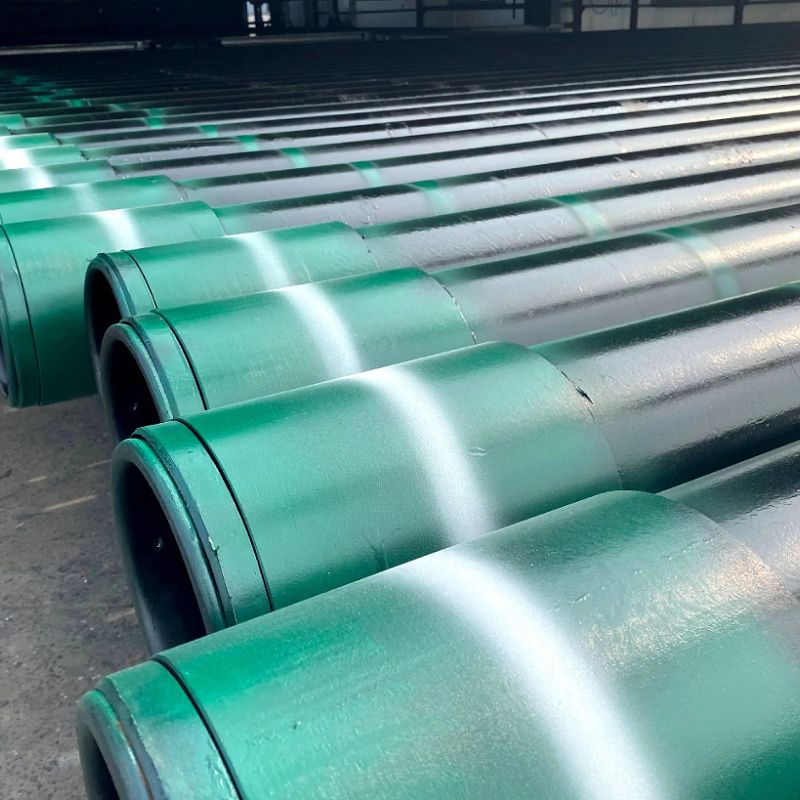
Products Features

Economical Strength Matching (Core Advantage)
The core advantage of J55 lies in its extremely high cost-performance ratio. For conventional oil and gas wells with shallow depth, low pressure, and non-corrosive media, J55 is the preferred choice for controlling engineering costs. Particularly when combined with the ERW (Electric Resistance Welding) process, it offers high dimensional accuracy, uniform wall thickness, and lower production costs than seamless pipes, making it the optimal economic solution to replace low-grade seamless pipes.
|
Performance indicators |
PSL1 Requirements |
|
Minimum Yield Strength (MPa) |
379 |
|
Maximum Yield Strength (MPa) |
552 |
|
Minimum Tensile Strength (MPa) |
483 |
|
Maximum Tensile Strength (MPa) |
- |
|
Yield strength ratio |
No mandatory requirements |
|
Elongation |
Calculate and determine using the tabular formula from API Spec 5CT |
Note: J55 has lower strength than K55, N80, L80, and P110, making it suitable for medium to shallow low-pressure wells. It is not applicable in H₂S acidic environments; for acidic service conditions, sulfide-resistant steel grades should be selected.

Good welding performance (core requirement for casing and tubing)
API 5CT J55 has a moderate carbon equivalent, offering good welding performance that meets on-site construction and coupling welding requirements. J55 typically has a carbon content of ≤0.40% and manganese content of ≤1.60%, with good toughness in the heat-affected zone of field welding and low risk of cold cracking.
Key welding points:
- Medium carbon equivalent, reducing the hardening tendency of the heat-affected zone and lowering the risk of cold cracks
- Strictly control harmful impurities P and S to ensure the purity of the base material and weld seam
- Supports seamless pipe butt welding and ERW welded pipe high-frequency welding, with good performance in field ring welding construction
The upper limit of carbon content for J55 is relatively wide; preheating is generally not required under normal operating conditions. For thick-walled or high-restraint joints, preheating is recommended at 80-120°C. This is an engineering practice experience value. The API standard does not mandate a preheating temperature; actual preheating should follow the WPS welding procedure qualification. After welding, control the hardness of the weld seam. J55 is also not recommended for acidic H₂S service conditions.

Good Toughness and Resistance to Brittle Fracture
J55 is only available at the PSL1 level. The API standard does not mandate Charpy impact testing; impact testing is only performed when explicitly required by the purchase contract. It has a ferrite-pearlite microstructure and is suitable for service in shallow and semi-shallow wells under normal temperature conditions. It is not recommended for use in low-temperature severe service conditions.
Typical impact requirements (to be implemented only when agreed in the contract):
- Test Temperature: According to the user's project requirements
- Impact energy: as agreed in the procurement agreement

Good Corrosion Resistance and Environmental Adaptability
API 5CT J55 has uniform corrosion resistance in atmospheric, fresh water, soil, and general oil and gas media. It is not recommended for use in H₂S-containing acidic oil and gas environments; instead, C90/T95 sour service steel grades should be selected. For CO₂ corrosion conditions, an assessment is required, and 13Cr or other corrosion-resistant alloys should be chosen for severe corrosion environments.
Good Cold Bending and Processing Performance
API 5CT J55 has a moderate carbon content and exhibits good cold bending formability, allowing it to undergo cold bending as well as hot bending for elbow fabrication. The pipe ends support threading, upsetting, and beveling, and can be processed with STC/LTC/BTC threads to meet the API 5CT thread and coupling technical requirements.
Technical Specifications
Chemical Composition (API Spec 5CT / ISO 11960)
|
Element |
PSL1 |
Note |
|
C |
≤ 0.40% |
Control carbon content to ensure welding performance |
|
Mn |
≤ 1.60% |
Solid solution strengthening, improve strength |
|
P |
≤ 0.030% |
Harmful impurities, strictly controlled |
|
S |
≤ 0.030% |
Harmful impurities, strictly controlled |
|
Si |
≤ 0.45% |
Deoxidation, reinforced matrix |
|
CEIIW |
No mandatory requirements |
ERW products can be arranged according to the agreement |
Physical Properties
|
Property |
Value/Range |
Test Conditions |
|
Density |
8.0 g/cm³ |
Room Temperature (20°C) |
|
Melting Point |
1360 - 1397°C |
--- |
|
Resistivity |
≈ 0.97 - 1.0 μΩ·m |
Room Temperature |
|
Thermal conductivity |
≈ 12 W/(m·K) |
Room Temperature |
|
Coefficient of thermal expansion (20-100°C) |
≈ 14.9 - 16.0 × 10⁻⁶ /K |
--- |
|
Elastic modulus (Young's modulus) |
≈ 195 GPa |
Room Temperature |
|
Magnetism |
Non-magnetic (completely austenitic in solution-annealed condition, with extremely low permeability) |
It is essentially non-magnetic under various conditions |
Physical Properties
|
Property |
Value/Range |
Test Conditions |
|
Density |
≈ 7.85 g/cm³ |
Room temperature (20℃) |
|
Melting point |
≈ 1420–1460℃ |
- |
|
Modulus of elasticity |
≈ 207 GPa |
Room temperature |
|
Thermal conductivity |
≈ 50 W/(m·K) |
Room temperature |
|
Thermal expansion coefficient (20–100℃) |
≈ 11.5 × 10⁻⁶ /K |
- |
|
Poisson's ratio |
≈ 0.28 |
Room temperature |
Mechanical Properties (Typical Values)
|
Property |
PSL1 |
Standard |
|
Minimum yield strength |
379 MPa |
API Spec 5CT / ISO 11960 |
|
Maximum yield strength |
552 MPa |
API Spec 5CT / ISO 11960 |
|
Minimum tensile strength |
483 MPa |
API Spec 5CT / ISO 11960 |
|
Maximum tensile strength |
- |
API Spec 5CT / ISO 11960 |
|
Elongation |
Calculate and determine using the tabular formula from API Spec 5CT |
API Spec 5CT |
Note: The '55' in J55 represents a minimum yield strength of 55,000 psi (379 MPa), with the numerical unit being ksi (kips per square inch). The actual yield strength range of the pipe material is 379–552 MPa.
Applicable Media
1. Oil and Natural Gas:
Medium Shallow Well Casing, Tubing and Couplings
2. High-pressure oil and gas wells:
Medium-shallow well, low-pressure oil and gas well
3. General Fluids:
Conventional oil and gas well completion and production operations
Note: API 5CT J55 is not suitable for H₂S-containing acidic oil and gas conditions; for acidic conditions, API 5CT sour-resistant steel grades C90, T95, or corrosion-resistant alloys 13Cr and 22Cr should be selected.
Product Forms and Manufacturing Process
Seamless Steel Pipe (Seamless)
• Process:hot rolling piercing + elongation rolling + as rolled / normalized heat treatment
• OD range: 114.3–508 mm (4-1/2″–20″)
• Wall thickness range: 5.21–16.13 mm
• Features: weld free with reliable pressure resistance, suitable for shallow / medium shallow low pressure oil and gas wells
• Typical applications: tubing and casing for CO₂-containing wells, high-pressure wells, wellhead gathering lines
Straight Seam High-Frequency Resistance Welded Pipe ERW (J55 ERW is supplied as a standard product under API5CT, no SR11 required)
• Process: Hot-rolled coil → Cold bending forming → High-frequency resistance welding → Normalizing heat treatment
• Outer Diameter Range: ≤508 mm (20\")
• Wall thickness range: ≤16 mm
• Features: High dimensional accuracy, high production efficiency, and significant cost advantages
• Typical applications: shallow wells, semi-deep wells, low-pressure oil and gas wells, general fluid transportation
• Welding Control: High-frequency welding process, weld seam meets all API 5CT requirements for ERW products
Applicable Standards and Delivery Condition
• Standards: API Spec 5CT, ISO 11960, GB/T 19830
• Product specification levels: PSL1 (Basic Level) as default; PSL2 is additional Annex H upgrade, to be explicitly agreed in purchase contract.
• Delivery condition: Hot Rolling / Normalizing
• End finishing: plain end, beveled end, threaded end (STC, LTC, BTC), special threaded end
• Certification: Provide material certificates in accordance with the procurement contract requirements; PSL1 does not have mandatory SR15 certificates or mandatory full-process traceability clauses.
Heat Treatment System and Welding Points
API 5CT J55 is delivered in hot-rolled or normalized condition and does not require quenching, tempering, or other heat treatment processes.
1. Normalizing treatment:
Heat to 850-930°C, then air cool to obtain a ferrite-pearlite microstructure, which balances strength and toughness.
2. Post-weld Heat Treatment (as required):
If stress relief of welding residual stresses is needed, stress-relief annealing at 550-620°C with a holding time of 1-2 hours can be performed; strictly control the heating and cooling rates to avoid affecting the base material properties.
Important Reminder:
• For general oil and gas operating conditions without H₂S, stress relief heat treatment is generally not required after welding.
• J55 is not suitable for H₂S acidic media. For acidic service conditions, anti-sulfur steel grades C90/T95 should be selected.
• Control the welding heat input and interpass temperature to prevent coarse grain growth and excessive hardness in the heat-affected zone.
API 5CT J55 is suitable for oil tubes, casing, and couplings in medium and shallow wells, as well as low-pressure oil and gas wells. The recommended applications are as follows:
Application Fields
-
Oil and Natural Gas Drilling
• Medium shallow wellbore casing, tubing
• Low-pressure oil and gas well
• Conventional oil and gas well completion and oil production operations
• Underground wellhead connection components
Delivery and Customization
We provide flexible and reliable supply chain solutions to ensure you obtain API 5CT J55 OCTG that exactly matches your project requirements.
Customizable Material Forms
We support the production of various base and special forms to drawings or specifications.
|
Form |
Seamless Pipe
|
Straight Seam Electric Resistance Welded Pipe ERW
|
|---|---|---|
|
Conventional Range |
Outer diameter: 114.3–508 mm; Wall thickness: 5.21–16.13 mm |
Outer diameter: 114.3–508 mm; Wall thickness: 5.21–16 mm |
|
Customization Capability |
Hot-rolled seamless pipes, fixed-length cutting, bevel processing, pipe end threads, special heat treatment conditions |
High-frequency ERW welded pipes, fixed-length cutting, bevel processing, and coating anti-corrosion treatment |
Why Choose Us? - Reliable Engineering Technology. Dependable Delivery.
We are not just a supplier, but a trusted materials partner for you in China.
Vertically Integrated Production
Own 20,000㎡ facility with 10+ automated lines (8,000+ tons/year). In-house tooling & die center enables rapid customization and effective cost control - no middleman markup.
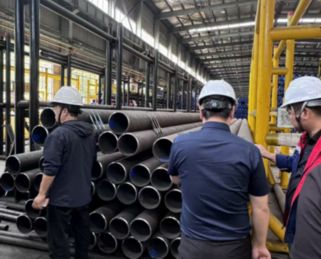
Strict Quality Control at Every Stage
Full traceability across key QC checkpoints throughout production. 100% compliant with ASTM/ASME, EN, and GB standards. Material test reports available with every shipment.
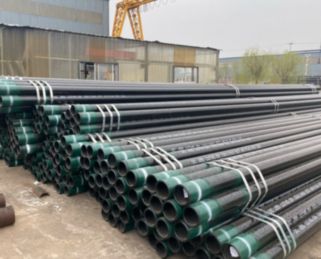
Reliable Delivery & Export Packaging
10+ years exporting to Europe, North America, Southeast Asia & Middle East with waterproof and anti-rust protection, combined with flexible shipping options ensures safe and on-time arrival.
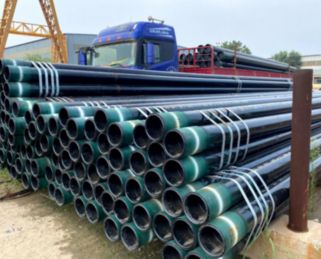
Sample Validation Before Mass Production
We provide free samples for quality verification, allowing you to place bulk orders only after approval. We ensure consistency from sample to mass production by accurate dimensional measurement and transparent manufacturing.
Summary of Core Advantages
Medium Strength, High Cost-effectiveness
Minimum yield strength of 379 MPa and minimum tensile strength of 483 MPa, meeting the operating conditions of medium and shallow low-pressure oil and gas wells, with a prominent economic cost advantage.
01
Hot-rolled / Normalized Delivery
The microstructure is ferrite-pearlite, suitable for conventional service conditions in shallow to medium-depth wells.
02
Good Welding Performance
Controllable carbon equivalent allows on-site welding of seamless pipes and ERW welded pipes, with excellent field ring welding construction performance.
03
Diverse Supply Forms
Both seamless and ERW welded pipes are supplied as standard, with an outer diameter range of 114.3 to 508 mm.
04
Complies with Multiple International Standards
API Spec 5CT, ISO 11960, GB/T 19830, etc.
05
FAQ
Q: Does API 5CT J55 have PSL2? How to select it?
Q: What are the differences between API 5CT J55, K55, N80-1, N80Q, L80-1, P110 ? How to choose?
Q: What is the maximum service temperature of API 5CT J55?
Q: What about the weldability of API 5CT J55?
Q: How is the corrosion resistance of API 5CT J55?
Q: Can API 5CT J55 replace ASTM A53 ?
Hot Tags: api 5ct j55, China api 5ct j55 manufacturers, suppliers, factory