


Products Features

Excellent High-Temperature Mechanical Properties
Hastelloy X maintains effective strength at temperatures up to approximately 1200°C. Its creep and stress rupture resistance are particularly outstanding, allowing stable operation under prolonged high-temperature loads. At 815°C, its tensile strength remains around 350 MPa; at 980°C, it still possesses good creep rupture strength.

Superior Oxidation and Thermal Corrosion Resistance
With nickel as the matrix (approximately 47%) and a high chromium content of about 22%, Hastelloy X forms a dense chromic oxide protective layer in high-temperature environments, serving as the primary barrier against high-temperature oxidation and sulfide corrosion. The alloy can withstand repeated heating and cooling cycles up to 1175°C and demonstrates good adaptability to oxidizing, carburizing, and sulfur-containing atmospheres. It exhibits excellent oxidation and thermal corrosion resistance even at extreme high temperatures up to 1200°C.

Good Processability and Weldability
Compared to high-temperature alloys relying on precipitation strengthening, Hastelloy X exhibits excellent plasticity and toughness in the solution-treated condition, facilitating cold and hot working forming. The typical hot working temperature range is between 950°C and 1200°C. Various conventional welding processes such as argon arc welding, seam welding, and spot welding can be employed, with minimal cracking after welding and typically no preheating required.

Good Forming and Machining Properties
It has good cold and hot workability, with a forging heating temperature of approximately 1170°C. The average grain size of the alloy is closely related to the deformation degree and final forging temperature of the forgings. Appropriate cold and hot working processes are recommended to maintain optimal material properties.
Technical Specifications
Chemical Composition
|
Element |
Standard Requirements |
Notes |
|
Ni |
Remaining quantity (≥47.0%) |
Matrix elements that provide a stable face-centered cubic crystal structure and excellent corrosion resistance |
|
Cr |
20.50 - 23.00% |
Forming a dense chromium oxide protective film is a key element in resisting high-temperature oxidation and sulfide corrosion. |
|
Fe |
17.00 - 20.00% |
Partially replacing nickel helps stabilize the austenitic structure while optimizing costs and maintaining performance. |
|
Mo |
8.00 - 10.00% |
The main solid solution strengthening agent, effectively enhancing the high-temperature strength and creep resistance of the alloy matrix |
|
Co |
0.50 - 2.50% |
Solid solution strengthening agent, improves creep resistance |
|
W |
0.20 - 1.00% |
Aid solid solution strengthening to further enhance high-temperature stability |
|
C |
0.05 - 0.15% |
Form carbides to serve as grain boundary strengthening |
|
Mn |
≤ 1.00% |
Deoxidizer, improve hot working properties |
|
Si |
≤ 1.00% |
Deoxidizer |
|
Al |
≤ 0.50% |
Deoxidation and auxiliary stabilization elements |
|
P |
≤ 0.040% |
Impurity elements, strictly controlled |
|
S |
≤ 0.015% |
Prevent hot brittleness |
|
B |
≤ 0.008% |
Minor additions to optimize grain boundary strength |
Physical Properties
|
Property |
Value/Range |
Test Conditions |
|
Density |
8.22 g/cm³ |
Room temperature (20°C) |
|
Melting Point |
1290 – 1355°C |
- |
|
Coefficient of Thermal Expansion (20-100°C) |
12.1 × 10⁻⁶ /K |
- |
|
Elastic modulus (Young's modulus) |
205 GPa |
Room temperature (typical value) |
|
Thermal Conductivity (23°C) |
9.1 W/(m·K) |
Room temperature |
|
Resistivity |
1.18 - 1.25 μΩ·m |
Room temperature (typical value) |
|
Specific Heat Capacity |
486 J/(kg·K) |
23°C |
|
Magnetism |
Non-magnetic |
It has an austenitic structure in the solution-annealed condition |
Mechanical Properties (Annealed Condition, Typical Values)
|
Property |
Typical Value |
Specification |
|
Tensile Strength |
≥ 765 MPa |
ASTM B435 / AMS 5536 |
|
Yield strength (0.2% offset) |
≥ 380 MPa |
ASTM B435 / AMS 5536 |
|
Elongation |
≥ 40% |
ASTM B435 / AMS 5536 |
|
Hardness |
≤ 90 HRB |
Solution-treated condition |
High-temperature performance
Hastelloy X exhibits excellent oxidation resistance even at temperatures up to approximately 1200°C. The Cr₂O₃ oxide film formed on its surface is highly stable in oxidizing, carburizing, and sulfur-containing atmospheres, withstanding repeated heating and cooling cycles up to 1175°C. It can operate for short periods at 1080°C, but long-term use is recommended below 900°C.
Carburization Resistance: Thanks to the stable oxide film formed by its high chromium content (approximately 22%), Hastelloy X demonstrates good carburization resistance in carbon-rich atmospheres. It effectively resists carbon penetration and excessive carbide precipitation, making it suitable for hydrocarbon cracking environments such as petrochemical furnace tubes.
Creep and Creep Strength (Typical Reference Values):
|
Temperature (°C) |
Stress (MPa) |
Break time (h) |
Applicable Instructions |
|
900 |
≈ 40 - 50 |
≈ 1000 |
It has good high-temperature durability and is suitable for long-term heat-resistant operating conditions. |
|
980 |
≈ 20 - 30 |
> 1000 |
Reference for structural component applications at extremely high temperatures |
At 980°C, Hastelloy X still maintains good creep rupture strength; at 870°C, the 1000-hour endurance strength is ≥50 MPa (estimated value, corresponding to the aviation standard test point), meeting the long-term safe operation requirements of hot-end components in aviation engines.
|
Temperature (°C) |
Tensile Strength (MPa) |
Yield Strength (MPa) |
|
20 (room temperature) |
≥ 765 |
≥ 380 |
|
815 |
≈ 350 |
≈ - |
|
980 |
- |
Still has good creep rupture strength |
High-temperature strength decreases gradually as temperature rises, but tensile strength can still be maintained around 350 MPa at 815°C. Above 900°C, strength drops significantly, and high-stress pressure-bearing design is not recommended in this temperature range.
Room Temperature Tensile Properties: Hastelloy X exhibits excellent strength-ductility balance at room temperature, with typical tensile strength ≥ 765 MPa, yield strength ≥ 380 MPa, and elongation ≥ 40%, providing reliable support for cold forming, machining, and safe operation of structural components.
Pitting Resistance Equivalent (PREN): Hastelloy X is not primarily selected based on Pitting Resistance Equivalent (PREN). Its design focus lies in high-temperature oxidation resistance, carburization resistance, and creep strength within the 800–1000°C range. Consequently, its resistance to localized corrosion in chloride-containing acidic environments is typically significantly lower than that of third-generation Ni-Cr-Mo alloys (e.g., C-2000, C-59).
Applicable Media and High-Temperature Scenarios
1. High-temperature oxidizing atmospheres (air, flue gases)
2. Carburizing atmospheres (hydrocarbon pyrolysis gases)
3. Sulfur-containing atmospheres (combustion exhaust gases, but high-reducing sulfur/vanadium environments should be avoided)
4. High-temperature corrosive mixed gases (industrial furnace combustion environments)
5. Medium-to-low-temperature chloride-containing chemical media (downgraded use compared to C-series alloys)
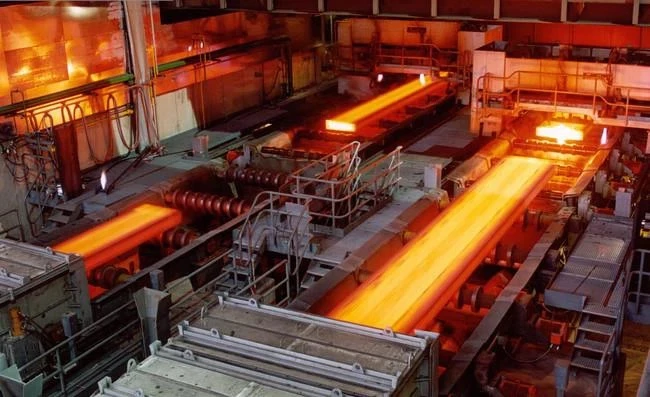
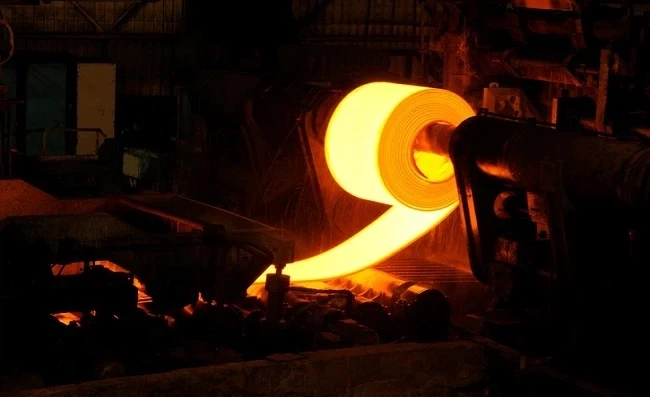
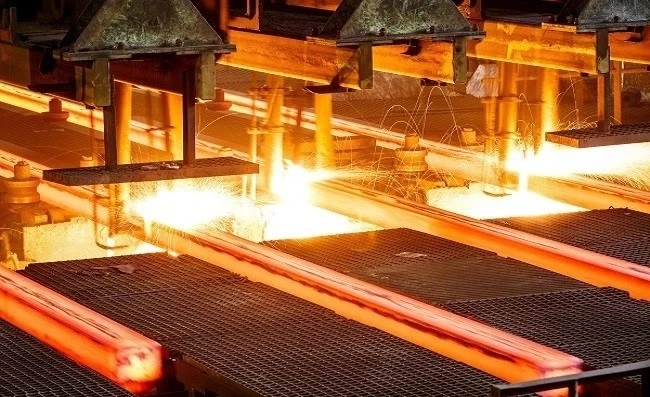
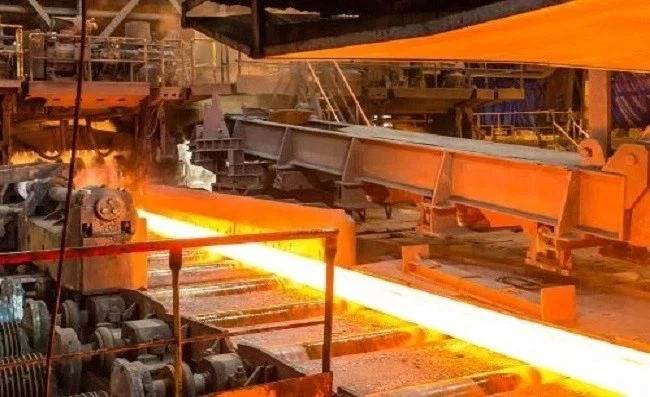
Hastelloy X is a classic material in the fields of aerospace, industrial gas turbines, and high-temperature industrial furnaces, achieving an ideal synergistic balance among high-temperature strength, oxidation resistance, and machinability.
Application Fields
-
Aerospace Field: It is a classic material for manufacturing hot-end components of aircraft engines such as combustion chambers, flame tubes, transition sections, afterburner chambers, and tailpipes. These components directly withstand gas erosion and have extremely strict requirements for the material's high-temperature strength, oxidation resistance, and thermal fatigue resistance.
-
Industrial Gas Turbines: It is also widely used in high-temperature components of gas turbines such as combustion chambers, nozzles, rectifiers, and structural covers, ensuring reliable operation of gas turbines for power generation and mechanical drive.
-
High-Temperature Industrial Furnace Field: It is used to manufacture furnace rolls, radiant tubes, muffle cans, heat exchangers, catalyst support gratings, etc., which withstand high temperatures and corrosive atmospheres in heat treatment, metallurgical, and glass manufacturing industries.
-
Petrochemical and Energy Field: In harsh chemical environments involving high temperatures, sulfur-containing, and reducing acid gases, it is used for critical reactor, pipe, and valve components. It is also employed in high-temperature gas-cooled nuclear reactors.
-
Chemical Processing: It can be used for heat exchangers, reactor internals, etc., that need to withstand high temperatures and a certain degree of corrosion. However, compared to C-series alloys (C-276, C-2000), its corrosion resistance in halogen-containing reducing acids is limited.
-
Catalyst Support and Exhaust Treatment: It serves as a metallic carrier or high-performance honeycomb structural material in post-engine treatment devices.
-
Nuclear Engineering: It is used in high-temperature gas-cooled nuclear reactors and other critical structural components of nuclear engineering.
-
Glass Molds and Exhaust Systems: Leveraging its high-temperature thermal fatigue resistance and oxidation resistance, it is suitable for equipment with high requirements for thermal cycle stability such as aircraft engine exhaust systems and glass forming molds.
Delivery and Customization
We offer flexible and reliable supply chain solutions to ensure you receive Hastelloy X materials that perfectly match your project requirements.
|
Form |
 Sheet/Plate
|
 Bar/Rod
|
 Seamless Pipe
|
 Strip/Sheet Coil
|
 Wire/Wire Rod
|
|---|---|---|---|---|---|
|
Conventional Range |
Thickness: 0.5 - 100 mm |
Diameter Φ6-500mm |
Outer diameter Φ10-300mm |
Thickness: 0.1 – 3.0 mm |
Diameter Φ0.5-10mm |
|
Customization Capability |
Special thick/thin rolling, ultra-wide plates; special surface treatment, fixed-length cutting |
Large-sized forged bars (up to Φ800 mm), special-shaped bars, and various heat treatment conditions |
Large-diameter thick-walled pipes, special alloy composition; Pipe end processing (beveling, fixed length) |
Different hardness conditions, special heat treatments (stabilization treatment, grain size control), acid-washed surfaces, electrolytic polishing, coatings, or special protective films |
Special surface treatment, precision drawing |
Why Choose Us? - Reliable engineering technology. Dependable delivery.
We are not just a supplier, but a trusted materials partner for you in China.

Vertically Integrated Production
Own 20,000㎡ facility with 10+ automated lines (8,000+ tons/year). In-house tooling & die center enables rapid customization and effective cost control - no middleman markup.

Strict Quality Control at Every Stage
Full traceability across key QC checkpoints throughout production. 100% compliant with ASTM/ASME, EN, and GB standards. Material test reports available with every shipment.

Reliable Delivery & Export Packaging
10+ years exporting to Europe, North America, Southeast Asia & Middle East with waterproof and anti-rust protection, combined with flexible shipping options ensures safe and on-time arrival.

Sample Validation Before Mass Production
We provide free samples for quality verification, allowing you to place bulk orders only after approval. We ensure consistency from sample to mass production by accurate dimensional measurement and transparent manufacturing.
FAQ
Q: What are the main advantages of Hastelloy X?
Q: What heat treatment does Hastelloy X require?
Q: What is the maximum service temperature?
Q: What is the difference between Hastelloy C-276 and C-59?
Hot Tags: hastelloy x, China hastelloy x manufacturers, suppliers, factory


