


Products Features

Excellent plasticity and cold forming performance
The core advantage of Gr 1 (TA1) lies in its extremely high purity and very low interstitial element content. The oxygen content is strictly controlled to ≤ 0.18%, endowing the material with exceptionally high ductility (elongation ≥ 24-30%) and excellent cold formability in the annealed condition. It can undergo complex forming operations such as deep drawing, cold bending, spin forming, and bulging. Its limiting draw ratio exceeds that of 304 stainless steel, making it suitable for manufacturing complex-shaped components such as heat exchanger plates, chemical linings, bellows, titanium cups, and deep-drawn parts. This alloy has a low yield-to-tensile strength ratio (typically < 0.7) and exhibits an extremely long work hardening range after yielding. It can tolerate massive plastic deformation without rupture, making it the most ductile and soft grade in the industrial pure titanium series.

Excellent corrosion resistance
Gr 1 (TA1) exhibits exceptional corrosion resistance in numerous corrosive media, with its core mechanism being the ability to instantly form an extremely thin (several nanometers), dense, stable, and self-healing TiO₂ passivation film on its surface. In media such as seawater, chloride solutions, wet chlorine gas, nitric acid, organic acids, and alkaline solutions, its corrosion resistance far exceeds that of stainless steel and copper alloys, with an extremely low corrosion rate (e.g., almost no pitting or crevice corrosion occurs in seawater). It is one of the few metal materials capable of withstanding corrosion by wet chlorine gas, making it a core material choice for chlor-alkali industry, seawater desalination, and condensers in coastal power plants.

Lightweight and high specific strength advantages
The density of Gr 1 (TA1) is approximately 4.51 g/cm³, which is only 57% of that of carbon steel, giving it a natural lightweight advantage. Although its absolute strength is not high (tensile strength in annealed condition: 240-370 MPa), its specific strength (strength/density) remains considerable. It is particularly valuable in applications where lightweighting is required but loads are not extreme, such as aircraft skins and structural components, ship piping, and deep-sea equipment. Its modulus of elasticity is about 105 GPa, roughly half that of steel, resulting in large elastic deformation and excellent vibration damping and impact resistance.

Good machining and welding properties
Gr 1 (TA1) exhibits excellent weldability and can be welded using various methods such as TIG, MIG, and plasma welding. The strength coefficient of the welded joint can reach over 90% of the base metal, making it one of the best weldable grades among titanium and titanium alloys. When welding, high-purity argon gas must be used to fully protect the high-temperature zone to prevent oxidation contamination that could lead to embrittlement. This alloy has good cold and hot working properties and can undergo forging, rolling, stamping, deep drawing, and other processes. However, its machinability is poor due to low thermal conductivity and a tendency to stick to tools. Hard alloy tools, low cutting speeds, and adequate cooling are required. Annealing can eliminate processing stresses and restore ductility, with typical annealing temperatures for recrystallization ranging from 650 to 750°C.
Technical Specifications
Chemical Composition
|
Element |
Standard Requirements |
Notes |
|
Ti |
≥ 99.5% |
Matrix elements ensure excellent ductility and corrosion resistance with high purity guarantee |
|
O |
≤ 0.18% |
Strict control: for every 0.1% increase in strength, there is an approximate 100 MPa improvement, but plasticity decreases. |
|
Fe |
≤ 0.20% |
Strictly control to ensure processing performance and corrosion resistance |
|
C |
≤ 0.08% |
Strictly control to prevent the precipitation of carbides from impairing plasticity |
|
N |
≤ 0.03% |
Strictly control to prevent nitrides from causing embrittlement |
|
H |
≤ 0.015% |
Extremely strict to prevent hydrogen embrittlement fracture (titanium's 'archenemy') |
Physical Properties
|
Property |
Value/Range |
Test Conditions |
|
Density |
≈ 4.51 g/cm³ |
Room Temperature (20°C) |
|
Melting Point |
≈ 1660 ± 10°C |
- |
|
Specific Heat Capacity |
≈ 520 J/(kg·K) |
Room Temperature |
|
Thermal Conductivity |
≈ 16-22 W/(m·K) |
Room Temperature |
|
Resistivity |
≈ 0.42-0.48 μΩ·m |
Room Temperature |
|
Coefficient of thermal expansion (20-100°C) |
≈ 8.6 × 10⁻⁶ /K |
- |
|
Elastic modulus (Young's modulus) |
≈ 105-110 GPa |
Room Temperature |
|
Magnetism |
Non-magnetic |
- |
Mechanical Properties (Annealed Condition, Typical Values)
|
Property |
Typical Value |
Specification |
|
Tensile Strength |
≥ 240 MPa (Typical 240-370 MPa) |
ASTM B265, GB/T 3621 |
|
Yield Strength (0.2% Offset) |
≥ 140 MPa (Typical 140-250 MPa) |
ASTM B265 |
|
Elongation |
≥ 24% (Typical ≥ 30%) |
ASTM B265 |
|
Hardness |
≈ 60-80 HRB |
- |
Applicable Environment and Corrosion Resistance Performance
Recommended Applicable Media:
1. Seawater and Chloride Solutions: Excellent resistance to pitting and crevice corrosion, with no pitting after 1000 hours of salt spray testing.
2. Wet Chlorine Gas and Hypochlorites: One of the few metal materials that can resist corrosion by wet chlorine gas, a core material in the chlor-alkali industry.
3. Oxidizing Acids: Nitric acid (including boiling nitric acid), chromic acid, etc., with extremely low corrosion rate.
4. Organic Acids: Acetic acid, citric acid, urea solutions.
5. Alkaline Solutions: Sodium hydroxide, potassium hydroxide solutions.
Limitations:
1. Not applicable to dry chlorine gas and anhydrous strong oxidizing acids.
2. Not applicable to high-concentration fluoride ions (e.g., hydrofluoric acid, HF).
3. Not applicable to strongly reducing acids (e.g., heated dilute hydrochloric acid, dilute sulfuric acid). In such cases, titanium-palladium alloy (Grade 7) should be considered.
Operating Temperature: It is recommended to be ≤ 350°C. Antioxidant coating protection should be considered if this temperature is exceeded.
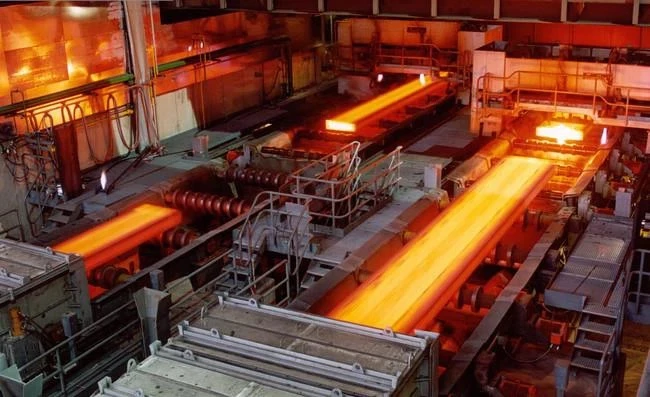
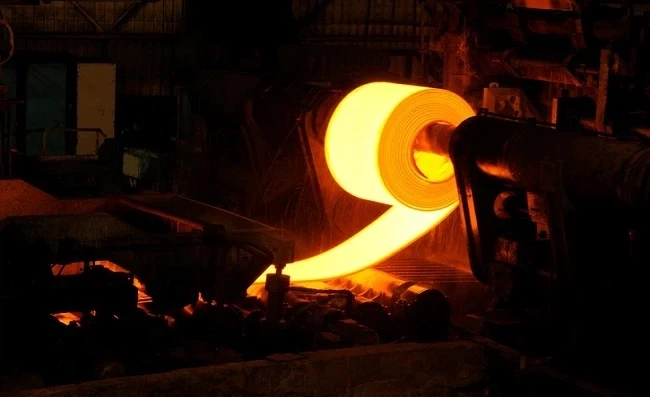
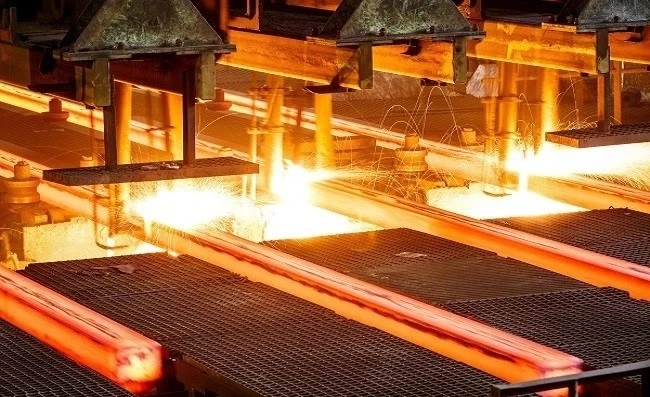
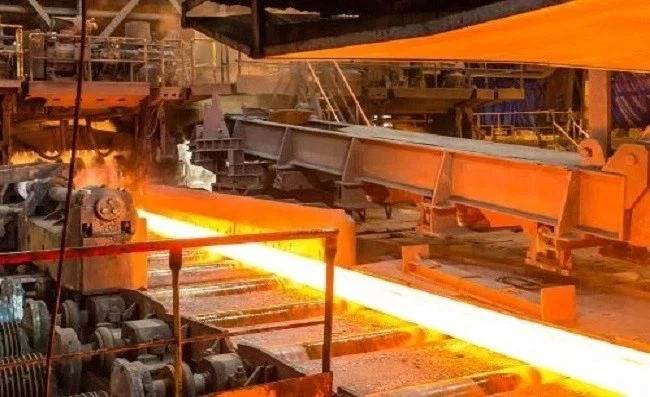
Gr 1 (TA1) is designed for applications requiring high plasticity, excellent corrosion resistance, and lightweight properties, and is recommended for the following fields:
Application Fields
-
Chemical and Chlor-Alkali Industries: Electrode frames for chlor-alkali electrolyzers, heat exchangers, reactor linings (explosion-bonded plates), pipes, valves, pump casings, and impellers for conveying corrosive media. Utilizing its exceptional corrosion resistance in wet chlorine gas, brine, and nitric acid.
-
Marine Engineering and Desalination: Heat transfer tubes for desalination plant evaporators, titanium tubes for coastal power station condensers, ship condensers, and corrosion-resistant structural components for offshore platforms. Practically \"impervious\" to seawater, with pitting and crevice corrosion resistance far exceeding that of stainless steel.
-
Medical and Biomedical Engineering: Non-load-bearing surgical implants (bone fixation plates, screws, maxillofacial repair meshes), surgical instruments (tweezers, forceps, scissors, which remain undistorted after repeated high-temperature sterilization). Excellent biocompatibility, non-magnetic properties, elastic modulus close to human bone (reducing stress shielding effect), and certified to ISO 5832-2 for medical-grade pure titanium.
-
Aerospace: Aircraft frames and skins, engine accessories, and low-pressure gas ducts, leveraging its lightweight and high plasticity advantages.
-
Electronics and Precision Manufacturing: Ultra-high-purity titanium targets, precision electronic instrument components, eyeglass frames, sports water bottles, golf club heads, and other consumer products.
-
Power Industry: Condenser titanium tubes, steam turbine blades, and heat exchange equipment for ocean thermal energy conversion power plants.
Delivery and Customization
We offer flexible and reliable supply chain solutions to ensure you receive Gr 1(TA1) materials that perfectly match your project requirements.
|
Form |
 Sheet/Plate
|
 Bar/Rod
|
 Pipe / Tube
|
 Strip/Sheet Coil
|
 Wire/Wire Rod
|
|---|---|---|---|---|---|
|
Conventional Range |
Thickness: 0.5 - 100 mm |
Diameter Φ6-500mm |
Outer diameter Φ10-300mm |
Thickness: 0.05 – 3.0 mm |
Diameter Φ0.1-10mm |
|
Customization Capability |
Hot-rolled or cold-rolled plates, ultra-thin sheets (starting from 0.1mm), stamped parts, and cut-to-length cutting |
Forged bars, hot-rolled bars, polished bars, and shaped bars |
Seamless pipes, welded pipes, fixed-length cutting |
Precision strip materials, stamping coil stock, laminated blanking, non-standard width |
Precision drawing, special surface treatment |
Why Choose Us? - Reliable Engineering Technology. Dependable Delivery.
We are not just a supplier, but a trusted materials partner for you in China.

Vertically Integrated Production
Own 20,000㎡ facility with 10+ automated lines (8,000+ tons/year). In-house tooling & die center enables rapid customization and effective cost control - no middleman markup.

Strict Quality Control at Every Stage
Full traceability across key QC checkpoints throughout production. 100% compliant with ASTM/ASME, EN, and GB standards. Material test reports available with every shipment.

Reliable Delivery & Export Packaging
10+ years exporting to Europe, North America, Southeast Asia & Middle East with waterproof and anti-rust protection, combined with flexible shipping options ensures safe and on-time arrival.

Sample Validation Before Mass Production
We provide free samples for quality verification, allowing you to place bulk orders only after approval. We ensure consistency from sample to mass production by accurate dimensional measurement and transparent manufacturing.
FAQ
Q: What are the main advantages of Gr 1 (TA1)?
Q: What kind of heat treatment does Gr 1 (TA1) require?
Q: What is the maximum usage temperature?
Q: What is the difference between Gr 1(TA1) and Gr 2(TA2)?
Hot Tags: gr1 (ta1), China gr1 (ta1) manufacturers, suppliers, factory


