


Products Features

Exceptional Strength and Specific Strength (Core Advantage)
TB6's core advantage lies in its extremely high strength level. After solution treatment and aging, its tensile strength is ≥ 1170 MPa, yield strength ≥ 1100 MPa, and can reach above 1400 MPa under certain heat treatment conditions, making it one of the strongest commercial titanium alloys. Its specific strength (≈ 250 kN·m/kg) far exceeds that of Gr5 (TC4, ≈ 200 kN·m/kg), stainless steels, and most nickel-based alloys, offering significant advantages in lightweight design. The alloy's high hardenability allows it to maintain uniform strength and toughness distribution in large cross-section components (over Φ150mm), making it suitable for manufacturing large-sized high-strength structural parts.

Excellent fracture toughness and fatigue resistance
TB6 maintains excellent fracture toughness (K_IC up to 40-60 MPa·√m) and superior fatigue crack propagation resistance while achieving extremely high strength. Its stress corrosion cracking (SCC) resistance is better than that of most α+β titanium alloys, demonstrating good resistance to delayed fracture in saltwater, chloride, and acidic environments. This property makes it the preferred material for aircraft landing gear and high-stress structural components.

Excellent Hardening Capacity and Applicability to Large Cross Sections
TB6 exhibits exceptionally superior hardening capacity, maintaining a fully hardened structure and uniform distribution of strength and toughness even on Φ150mm cross sections. This property is far superior to Gr5 (TC4, with a hardening cross section ≤ Φ50mm) and Gr9 (TA18), giving it a significant advantage in applications such as large-sized fasteners, large-diameter springs, and heavy structural components.

Excellent Hot Working and Forging Properties
TB6 exhibits superior forging performance in the beta phase region, allowing hot working processes such as forging, hot rolling, and hot extrusion within a temperature range of 800-950°C. Its forging fluidity is better than that of Gr5 (TC4), enabling the production of complex-shaped forgings, reducing machining allowances, and lowering manufacturing costs. Solution treatment is required after hot working to achieve optimal cold working properties and final mechanical property matching.
Good Cold Working Properties
TB6 exhibits excellent cold working formability in the solution-treated (β-annealed) state, enabling various cold working operations such as cold drawing, cold rolling, cold bending, and cold heading. Its cold working properties are superior to those of Gr5 (TC4), making it suitable for products requiring cold forming, including cold-headed fasteners, cold-drawn precision tubes, and cold-rolled strips. Strength can be further enhanced through aging treatment after cold working.
Excellent Corrosion Resistance
Like all titanium alloys, TB6 exhibits outstanding resistance to uniform corrosion and pitting in seawater, chloride solutions, most organic acids, and weakly reducing acids, relying on a dense, stable, and self-healing TiO₂ oxide film that forms spontaneously on its surface. Its corrosion resistance is comparable to that of Gr5 and performs well in acidic oil and gas environments containing H₂S and CO₂.
Technical Specifications
Chemical Composition(ASTM B348 / ASTM F136 / GB/T 2965)
|
Element |
Standard Requirements |
Notes |
|
Ti |
Remaining quantity (matrix) |
Matrix elements, providing a lightweight matrix and excellent corrosion resistance |
|
V |
9.0 - 11.0% |
Beta-stable elements, which significantly improve strength and hardenability |
|
Fe |
1.6 - 2.4% |
Beta-stable elements, which enhance strength and hardenability, and improve forging performance |
|
Al |
2.6 - 3.4% |
Alpha-stable elements, enhancing strength and thermal stability |
|
O |
≤ 0.13% |
Intercalation elements significantly affect the balance between strength and plasticity |
|
C |
≤ 0.05% |
Strict control; excessive levels will reduce plasticity |
|
N |
≤ 0.05% |
Gap elements, if too high, will reduce toughness |
|
H |
≤ 0.015% |
Strict control of hydrogen content to prevent hydrogen embrittlement |
|
Other elements (single) |
≤ 0.10% |
- |
|
Other elements (total) |
≤ 0.30% |
- |
Physical Properties
|
Property |
Value/Range |
Test Conditions |
|
Density |
4.65 g/cm³ |
Room Temperature (20°C) |
|
Melting Point |
≈ 1620°C |
- |
|
Coefficient of thermal expansion (20-400°C) |
9.2 × 10⁻⁶ /K |
- |
|
Elastic modulus (Young's modulus) |
≈ 105 GPa |
Room Temperature |
|
Thermal Conductivity (20°C) |
≈ 6.5 W/(m·K) |
- |
|
Resistivity |
≈ 1.80 μΩ·m |
- |
|
Poisson's ratio |
≈ 0.31 |
Room Temperature |
|
Magnetism |
Non-magnetic |
All titanium alloys are non-magnetic materials |
Mechanical Properties (Typical Values, ASTM B348 / GB/T 2965)
|
Performance |
Typical value for solid solution state |
Typical values for solution-treated and aged (STA) condition |
Implementation standards |
|
Implementation standards |
≥ 795 MPa |
≥ 1170 MPa |
ASTM B348 / GB/T 2965 |
|
Yield Strength (0.2% Offset) |
≥ 760 MPa |
≥ 1100 MPa |
ASTM B348 / GB/T 2965 |
|
Elongation |
≥ 15% |
≥ 6% |
ASTM B348 / GB/T 2965 |
|
Reduction of cross-sectional area |
≥ 35% |
≥ 15% |
- |
|
Hardness (Rockwell) |
≈ 26 HRC |
≈ 38 - 42 HRC |
- |
|
Impact Toughness (Charpy V-notch) |
30 - 50 J |
15 - 30 J |
- |
Note: The strength level of TB6 is significantly higher than that of Gr5 (TC4, ≥ 895 MPa), with its solution-treated and aged strength reaching more than 1.3 times that of Gr5. Medical-grade products must meet the strict compositional and performance requirements of ASTM F136. Specific properties can be adjusted according to the customer-specified heat treatment conditions (solution-treated condition, STA condition).
Corrosion Resistance (Typical Value)
|
Medium |
Concentration |
Temperature |
Corrosion Rate (mm/year) |
Rating |
|
Seawater |
- |
Room temperature to high temperature |
Ignored(<0.01) |
Excellent |
|
Atmospheric environment |
- |
Room temperature |
Ignored |
Excellent |
|
Nitric acid (HNO₃) |
10-40% |
Room temperature |
<0.05 |
Excellent |
|
Sulfuric acid (H₂SO₄) |
≤ 10% |
Room temperature |
<0.1 |
Good |
|
Hydrochloric acid (HCl) |
≤ 3% |
Room temperature |
<0.1 |
Good |
|
Sodium hydroxide (NaOH) |
10-50% |
Room temperature |
<0.05 |
Excellent |
|
Organic acids (such as acetic acid, citric acid, etc.) |
- |
Room temperature |
<0.1 |
Good |
|
Hydrogen sulfide/carbon dioxide oil and gas media |
- |
High temperature and high pressure |
<0.1 |
Good |
Note: Titanium alloys have poor corrosion resistance in media such as high-temperature concentrated sulfuric acid and hydrofluoric acid. TB6 exhibits good stress corrosion cracking resistance in oil and gas environments containing H₂S and CO₂. For specific material selection, please provide detailed operating conditions, and we can assist with targeted corrosion assessment.
High-temperature performance
TB6 maintains high strength at moderate temperatures. The following are typical reference values for tensile strength as a function of temperature (STA condition):
|
Temperature |
Tensile Strength (MPa) |
Performance retention rate |
|
Room Temperature (20°C) |
≥ 1170 |
100% |
|
200°C |
≈ 1050 |
≥ 90% |
|
300°C |
≈ 950 |
≥ 81% |
|
400°C |
≈ 820 |
≥ 70% |
|
500°C |
≈ 650 |
≥ 56% |
Long-term Thermal Stability:
TB6 is a metastable β-type titanium alloy, which exhibits good microstructural stability during long-term service at temperatures ≤ 300°C. However, prolonged exposure between 300-400°C may lead to α-phase precipitation causing embrittlement. It is recommended to conduct thorough performance verification under high-temperature conditions.
Antioxidation Performance:
TB6 can form a protective oxide layer below 500°C, with its antioxidation performance comparable to that of Gr5. For long-term service at higher temperatures, applying a protective coating is recommended.
Hardening Capacity and Applicability to Large Cross-Sections (Core Advantage)
TB6 has extremely excellent hardenability. The following are typical hardenability reference values:
|
Alloy Grade |
Fully Quenched Section |
Applicable Scenarios |
|
TB6 (Gr22) |
≥ Φ150 mm |
Large-sized fasteners, landing gear components, heavy structural parts |
|
Beta C (Gr19) |
≥ Φ300 mm |
Ultra-large size high-strength components |
|
Gr5 (TC4) |
≤ Φ50 mm |
Small and medium-sized structural components |
Note: The excellent hardenability of TB6 allows it to maintain a uniform distribution of strength and toughness in large-section components, which is a significant advantage that distinguishes it from α+β titanium alloys (such as Gr5).
Hot Working and Forging Properties
TB6 exhibits excellent forging performance in the β-phase region. The following are reference values for typical hot working parameters:
|
Hot Working Method |
Recommended Temperature Range |
Note |
|
Forging (β-region forging) |
950-1050°C |
The optimal balance of strength and toughness can be achieved |
|
Forging (α+β Zone Forging) |
800-950°C |
Fine-grained microstructure and better ductility can be obtained |
|
Hot-rolling |
850-950°C |
- |
|
Hot extrusion |
900-1000°C |
- |
Heat Treatment Regime:
The heat treatment of TB6 is mainly used to optimize the matching of microstructure and performance, with common specifications as follows:
1. Solution treatment (for obtaining optimal cold working performance and hardenability):
Heat to 760-790°C, hold for 0.5-1 hour, then water quench or oil quench. Obtain a metastable β microstructure to prepare for subsequent aging treatment.
2. Aging Treatment (for Achieving Maximum Strength):
Heat to 480-580°C, hold for 4-8 hours, then air cool. Fine α-phase precipitates, resulting in a significant increase in strength (tensile strength ≥ 1170 MPa).
3. Double Annealing (for improving fracture toughness):
First stage: Heat to 800-850°C, then air cool;
Second stage: Heat to 700-750°C, then air cool.
Note: Heat treatment should be carried out under vacuum or inert gas protection to avoid surface oxidation contamination.
Cold working performance
TB6 has good cold working properties in the solution state. The following are typical reference values for cold working capacity:
|
Cold Working Method |
Typical Deformation Amount (Single Instance) |
Intermediate Annealing |
Applicable Product Forms |
|
Cold Drawing (Tubes/Rods) |
15-25% |
Large deformation requires intermediate annealing |
Precision tubes and bars |
|
Cold Rolling (Strip/Sheet) |
20-30% |
Large deformation requires intermediate annealing |
Thin plates, strips |
|
Cold Bending |
Good formability |
Usually not needed |
Pipe materials, profiled materials |
|
Cold forging |
Good formability |
Large deformation requires intermediate annealing |
Fasteners, rivets |
Note: TB6 has better cold working performance than Gr5 (TC4), which is a key advantage for it as material for cold-heading fasteners. After cold working, its strength can be increased to over 1170 MPa through aging treatment.
Applicable Media
1. Atmospheric environment: Excellent corrosion resistance, no need for surface coating protection.
2. Seawater and chloride solutions: Good resistance to pitting and crevice corrosion.
3. Oxidizing acids: Such as nitric acid (moderate to low concentration at room temperature), excellent corrosion resistance.
4. Weak reducing acids: Such as dilute sulfuric acid (≤10%), dilute hydrochloric acid (≤3%), can be withstood at room temperature.
5. Organic acids: Acetic acid, oxalic acid, citric acid, etc.
6. Alkaline solutions: Sodium hydroxide, potassium hydroxide, etc. (good corrosion resistance at room temperature).
7. H₂S/CO₂ containing oil and gas media: Good resistance to stress corrosion cracking.
8. Aviation kerosene, hydraulic oil: Good compatibility.
Note: TB6 is not resistant to strongly corrosive media such as hydrofluoric acid, hot concentrated sulfuric acid, and concentrated hydrochloric acid.
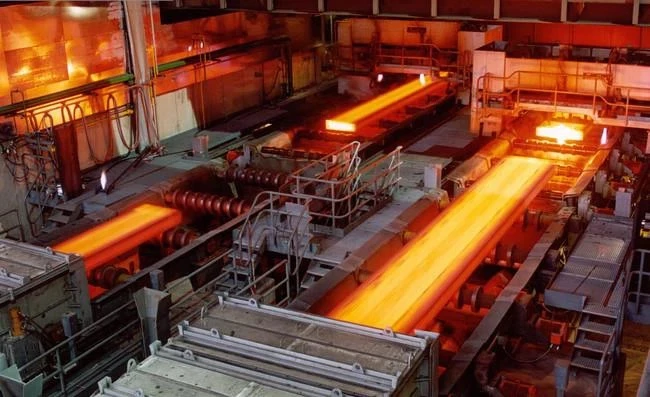
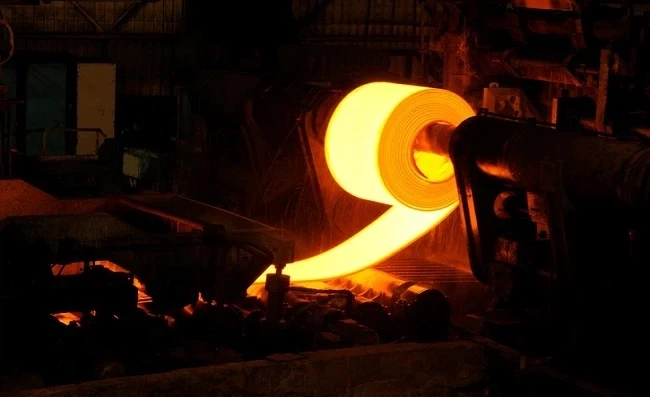
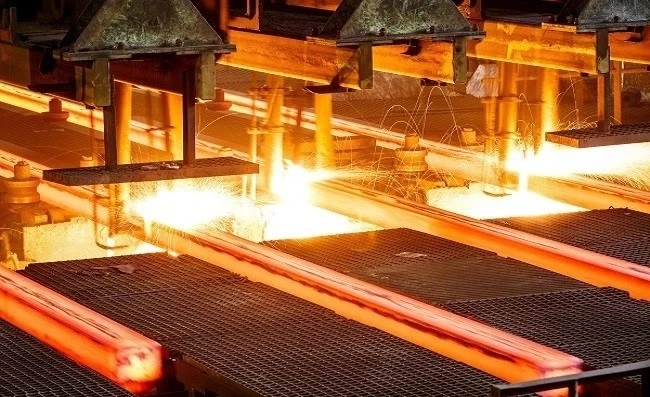
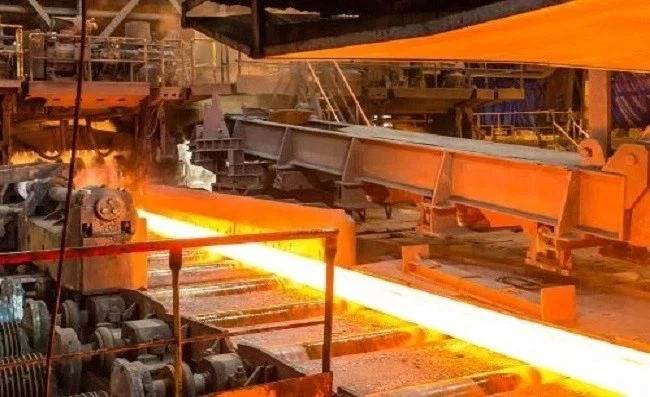
TB6 (Ti-10V-2Fe-3Al / Gr22) is suitable for applications requiring a combination of ultra-high strength, lightweight design, and high toughness. It is recommended for use in the following fields:
Application Fields
-
Aerospace (Core Application Areas)
Aircraft landing gear components (cylinders, piston rods, torque arms), high-strength fasteners (bolts, screws), airframe structural parts, missile casings, rocket structural components, helicopter rotor system parts. -
Medical and Biomedical Engineering
Orthopedic implants (hip stem, knee joint components), surgical instruments (compliant with ASTM F136 / ISO 5832-3). -
Oil and Gas
Downhole tools (drill pipe joints, packers, safety valves), completion equipment, acid medium handling equipment (resistant to H₂S and CO₂ corrosion), offshore platform fasteners. -
Automotive and High-Performance Industrial
High-performance springs, valve springs, suspension springs, engine connecting rods, lightweight drive components, racing fasteners. -
Marine Engineering
Deep-sea equipment structural parts, ship fasteners, seawater pump and valve components. -
Sports and Consumer Products
High-performance bicycle spokes, golf clubs, tennis racket frames, outdoor equipment. -
Chemical and Energy
Medium-to-high temperature corrosion-resistant fasteners, valve components (≤ 300°C), heat exchanger tube bundle fasteners.
Delivery and Customization
We offer flexible and reliable supply chain solutions to ensure you receive TB6(Ti-10V-2Fe-3Al / Gr22) materials that perfectly match your project requirements.
|
Form |
 Sheet/Plate
|
 Bar/Rod
|
 Pipe / Tube
|
 Strip/Sheet Coil
|
 Wire/Wire Rod
|
|---|---|---|---|---|---|
|
Conventional Range |
Thickness: 0.5 - 100 mm |
Diameter Φ6-500mm |
Outer diameter Φ10-300mm |
Thickness: 0.1 - 3.0 mm |
Diameter Φ0.5-10mm |
|
Customization Capability |
Hot-rolled plates, ultra-thin plates (starting from 0.1mm), fixed-length cutting, special surface treatments (pickling, sandblasting, polishing) |
Forged bars, hot-rolled bars, polished bars, shaped bars, and different heat-treated conditions (solution-treated condition, STA condition) |
Seamless tubes/welded tubes, precision tube materials, large-diameter thick-walled tubes, tube end processing (beveling, fixed length), special lengths |
Precision strip materials, stamping coil stock, laminated blanking, non-standard width, special protective film |
Precision drawing, spring wire, welding filler wire, special surface treatment |
Why Choose Us? - Reliable Engineering Technology. Dependable Delivery.
We are not just a supplier, but a trusted materials partner for you in China.

Vertically Integrated Production
Own 20,000㎡ facility with 10+ automated lines (8,000+ tons/year). In-house tooling & die center enables rapid customization and effective cost control - no middleman markup.

Strict Quality Control at Every Stage
Full traceability across key QC checkpoints throughout production. 100% compliant with ASTM/ASME, EN, and GB standards. Material test reports available with every shipment.

Reliable Delivery & Export Packaging
10+ years exporting to Europe, North America, Southeast Asia & Middle East with waterproof and anti-rust protection, combined with flexible shipping options ensures safe and on-time arrival.

Sample Validation Before Mass Production
We provide free samples for quality verification, allowing you to place bulk orders only after approval. We ensure consistency from sample to mass production by accurate dimensional measurement and transparent manufacturing.
FAQ
Q: What are the main advantages of TB6?
Q: What is the difference between TB6 and Gr5 (TC4)? How to choose?
Q: What is the difference between TB6 and Beta C (Gr19)? How to choose?
Q: What is the difference between TB6 and Gr9 (TA18)? How to choose?
Q: What is the maximum operating temperature of TB6?
Q: Why is the hardenability of TB6 superior to that of Gr5?
Q: Why does TB6 have better forging performance than other titanium alloys?
Q: What is the welding performance of TB6?
Q: Can TB6 replace Gr5?
Hot Tags: ti-10v-2fe-3al (tb6, gr22), China ti-10v-2fe-3al (tb6, gr22) manufacturers, suppliers, factory


