


Products Features

Excellent resistance to corrosion by reducing acids
The core advantage of Gr12 (TA10) lies in the synergistic addition of molybdenum (Mo) and nickel (Ni). After introducing 0.2%–0.4% molybdenum and 0.6%–0.9% nickel into industrial pure titanium, its corrosion resistance in reducing acid media is significantly enhanced. In non-oxidizing acids such as hydrochloric acid (HCl), sulfuric acid (H₂SO₄), formic acid, oxalic acid, and citric acid, the corrosion rate of Gr12 is much lower than that of industrial pure titanium. Within moderate concentration and temperature ranges, it can partially replace more expensive Gr7 (TA9) or nickel-based alloys. This property makes it a high-cost-performance material for handling corrosive media in fields such as chemical engineering, pharmaceuticals, and hydrometallurgy.

Excellent resistance to crevice corrosion and pitting corrosion
Gr12 (TA10) exhibits excellent resistance to crevice corrosion and pitting corrosion in high-temperature chloride solutions (such as seawater, brine, and brine). The addition of molybdenum enhances the stability of titanium's passive film in chloride media, while the addition of nickel further improves the material's corrosion resistance in acidic chloride environments. Synergistically, these elements enable the material to maintain a stable passive state even in high-temperature, high-chloride environments. This characteristic gives it an irreplaceable advantage in applications long exposed to highly corrosive media, such as desalination equipment, chlor-alkali industry, and marine engineering heat exchangers.

Good machining and welding properties
Gr12 (TA10) retains the excellent cold and hot working properties and welding performance of industrial pure titanium. It can undergo forming processes such as forging, rolling, stamping, and bending, and can be welded using various methods including TIG (Tungsten Inert Gas) welding, MIG (Metal Inert Gas) welding, plasma welding, electron beam welding, and resistance welding. The corrosion resistance of the welded joint is basically consistent with that of the base material. It is suitable for manufacturing complex corrosion-resistant equipment and large chemical containers.

Higher strength and creep resistance
Gr12 (TA10) has higher room temperature and high-temperature strength compared to industrial pure titanium, while also possessing better creep resistance. Within the moderate temperature range (≤ 300°C), the mechanical properties of Gr12 are significantly superior to those of Gr2 and Gr7, making it suitable for corrosion-resistant equipment subjected to certain loads and structural components in high-temperature conditions.
Long-term stable service life and high cost-effectiveness
Gr12 (TA10) exhibits extremely high corrosion margin and good mechanical properties in harsh corrosive environments, significantly extending equipment service life and reducing maintenance and replacement frequency. Compared to Gr7 (TA9), Gr12 does not contain the precious metal palladium (Pd), resulting in lower material costs and serving as an economical alternative to Gr7 in moderate corrosive environments. In industries such as chemical processing, seawater desalination, and pharmaceuticals, downtime losses caused by equipment failure due to corrosion often far exceed the cost of the materials themselves. Gr12 provides customers with long-term stable production assurance through lower material costs and overall lifecycle costs.
Technical Specifications
Chemical Composition
|
Element |
Standard Requirements(ASTM B348 / ASME SB-348) |
Notes |
|
Ti |
Remaining quantity |
Matrix element |
|
Mo |
0.2 – 0.4% |
Core alloying elements that enhance corrosion resistance and strength |
|
Ni |
0.6 – 0.9% |
Core alloying elements that enhance corrosion resistance |
|
Fe |
≤ 0.30% |
Strict control |
|
O |
≤ 0.25% |
Intercalation elements, which affect ductility and corrosion resistance |
|
C |
≤ 0.08% |
Impurity elements |
|
N |
≤ 0.03% |
Strict control |
|
H |
≤ 0.015% |
Prevent hydrogen embrittlement |
Physical Properties
|
Property |
Value/Range |
Test Conditions |
|
Density |
4.51 g/cm³ |
Room Temperature (20°C) |
|
Melting Point |
≈ 1660°C |
- |
|
Thermal Conductivity |
≈ 16.0 W/(m·K) |
Room Temperature |
|
Resistivity |
≈ 0.56 μΩ·m |
Room Temperature |
|
Coefficient of thermal expansion (20–100°C) |
9.0 × 10⁻⁶ /K |
- |
|
Elastic modulus (Young's modulus) |
≈ 105 GPa |
Room Temperature |
|
Poisson's ratio |
≈ 0.34 |
Room Temperature |
Mechanical Properties (Annealed Condition, Typical Values)
|
Property |
Typical Value |
Specification |
|
Tensile Strength |
≥ 345 MPa |
ASTM B348 |
|
Yield Strength (0.2% Offset) |
≥ 220 MPa |
ASTM B348 |
|
Elongation (4D) |
≥ 25% |
ASTM B348 |
|
Reduction of cross-sectional area |
≥ 45% |
- |
|
Hardness |
≈ 85 HRB |
- |
Note: The tensile strength and yield strength of Gr12 are both higher than those of Gr2 and Gr7, making it suitable for applications that require withstanding higher loads.
Corrosion Resistance (Typical Value)
|
Medium |
Concentration |
Temperature |
Corrosion rate (mm/year) |
Grade |
|
Hydrochloric acid (HCl) |
5% |
Boiling Point |
< 0.1 |
Excellent |
|
Hydrochloric acid (HCl) |
10% |
Room Temperature |
< 0.05 |
Excellent |
|
Sulfuric acid (H₂SO₄) |
10% |
Room Temperature |
< 0.1 |
Excellent |
|
Sulfuric acid (H₂SO₄) |
5% |
60°C |
< 0.1 |
Excellent |
|
Formic acid |
50% |
Boiling Point |
< 0.1 |
Excellent |
|
Oxalic acid |
10% |
Boiling Point |
< 0.1 |
Excellent |
|
chloride solution (brine) |
3.5% |
100°C |
< 0.01 |
Excellent |
|
Seawater |
- |
High Temperature |
Negligible |
Excellent |
High-temperature performance
Gr12 (TA10) exhibits stable mechanical properties within the moderate temperature range:
|
Temperature |
Tensile Strength (MPa) |
Note |
|
Room Temperature |
≥ 345 |
- |
|
100°C |
≈ 310 |
Performance retention rate > 90% |
|
200°C |
≈ 275 |
Performance retention rate > 80% |
|
300°C |
≈ 235 |
Performance retention rate > 68% |
High-temperature corrosion resistance
Gr12 (TA10) maintains good corrosion resistance in high-temperature (≥ 200°C) chloride solutions and reducing acids, making it an ideal material choice for high-temperature corrosive environments such as high-temperature heat exchangers, deep well pipelines, and geothermal equipment.
Organizational stability
Gr12 is an alpha-type titanium alloy. It has no risk of phase transformation within the conventional service temperature range, maintains stable microstructure, and does not suffer from the phase transformation sensitivity issues associated with heat treatment strengthening in beta titanium alloys. It exhibits high performance consistency during long-term service.
Applicable Media
1. Hydrochloric Acid (HCl) - Concentration ≤ 10%, Moderate to Low Temperature
2. Sulfuric Acid (H₂SO₄) - Low Concentration, Room Temperature to Moderate Temperature
3. Organic Acids Such as Formic Acid, Oxalic Acid, Citric Acid, and Lactic Acid
4. High-Temperature Seawater, Brine, and Brine (Chloride Solutions)
5. Hypochlorites and Chlor-alkali Solutions
6. Wet Chlorine Gas (Containing Water)
7. Oxidizing Acids Such as Nitric Acid (Limited to Low Concentration)
Note: Gr12 is not suitable for strongly oxidizing media such as dry chlorine gas and fuming nitric acid, nor for media that can dissolve titanium substrates like hydrofluoric acid (HF). Its corrosion resistance in high-temperature concentrated hydrochloric acid is inferior to that of Gr7 (TA9).
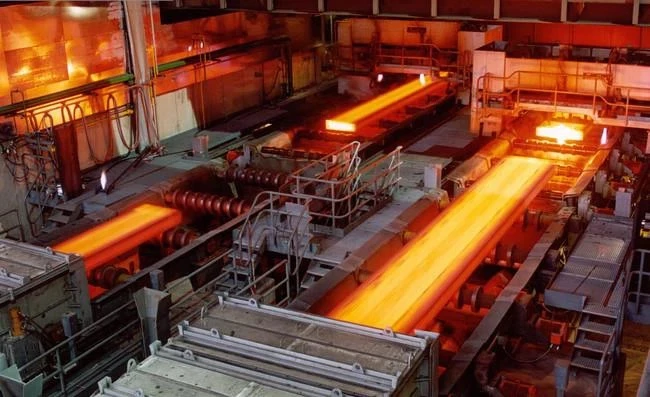
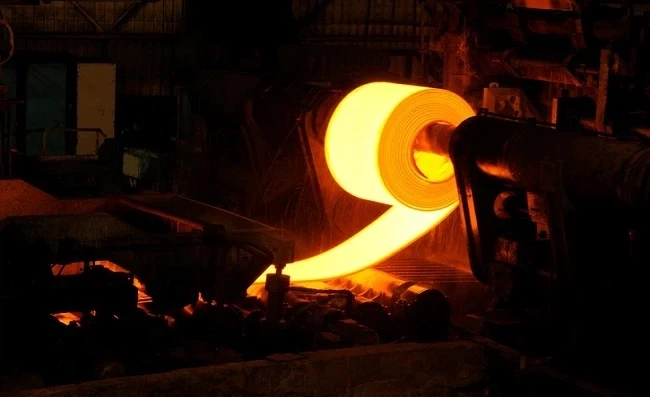
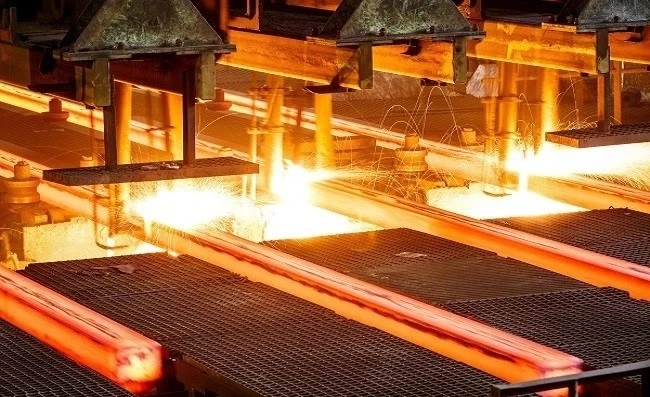
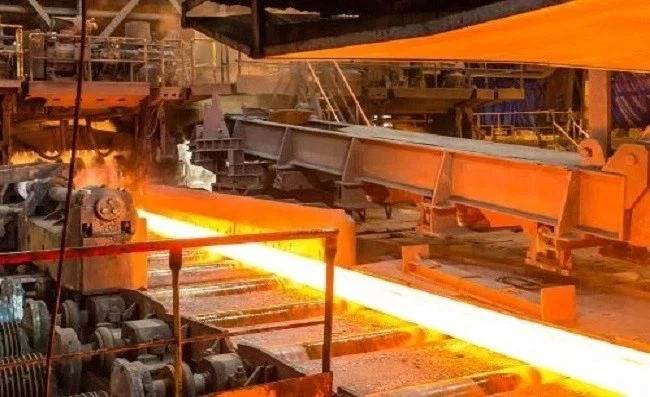
Gr12 (TA10, Ti-0.3Mo-0.8Ni) is designed for harsh corrosion environments, offering higher cost-effectiveness at the same level of corrosion resistance. It is recommended for use in the following fields:
Application Fields
-
Chemical and Petrochemical Engineering
Heat exchangers, condensers, reactors, evaporators, absorbers, piping systems, pumps and valves, agitators, fasteners, flanges. Typical media: hydrochloric acid (low concentration), sulfuric acid (low concentration), formic acid, acetic acid, chlor-alkali solutions. -
Desalination and Marine Engineering
Seawater heat exchangers, multi-stage flash (MSF) units, low-temperature multi-effect (MED) units, seawater piping systems, seawater pumps, heat exchanger tubes, condenser tubes. -
Chlor-Alkali Industry
Ion membrane electrolyzer components, wet chlorine coolers, chlor-alkali heat exchangers, anode assemblies, piping systems. -
Pharmaceutical and Fine Chemicals
Pharmaceutical reactors, high-purity chemical equipment, dye intermediate production equipment, organic acid processing equipment. -
Hydrometallurgy
Solvent extraction and electrowinning equipment for metals such as copper, nickel, and cobalt, high-pressure acid leaching (HPAL) piping, pulp heat exchangers. -
Environmental Protection and Waste Treatment
Exhaust gas scrubbers, wastewater treatment equipment, flue gas desulfurization (FGD) systems, waste incineration exhaust gas treatment equipment. -
Aerospace and Military
Aircraft hydraulic tubing, corrosion-resistant components of engine nacelles, ship seawater systems, structural components of deep-sea equipment. -
Geothermal Power Generation
Geothermal well piping, geothermal heat exchangers, steam transmission pipelines.
Delivery and Customization
We offer flexible and reliable supply chain solutions to ensure you receive Gr12 (TA10) materials that perfectly match your project requirements.
|
Form |
 Sheet/Plate
|
 Bar/Rod
|
 Pipe / Tube
|
 Strip/Sheet Coil
|
 Wire/Wire Rod
|
|---|---|---|---|---|---|
|
Conventional Range |
Thickness: 0.5 - 100 mm |
Diameter Φ6-500mm |
Outer diameter Φ10-300mm |
Thickness: 0.05 – 3.0 mm |
Diameter Φ0.1-10mm |
|
Customization Capability |
Hot-rolled or cold-rolled plates, ultra-thin plates (starting from 0.1mm), stamped parts, and fixed-length cutting |
Forged bars, hot-rolled bars, polished bars, and shaped bars |
Seamless tubes, welded pipes, fixed-length cutting, U-shaped tubes |
Precision strip materials, stamping coil stock, laminated blanking, non-standard width |
Precision drawing, welding filler wire, special surface treatment |
Why Choose Us? - Reliable Engineering Technology. Dependable Delivery.
We are not just a supplier, but a trusted materials partner for you in China.

Vertically Integrated Production
Own 20,000㎡ facility with 10+ automated lines (8,000+ tons/year). In-house tooling & die center enables rapid customization and effective cost control - no middleman markup.

Strict Quality Control at Every Stage
Full traceability across key QC checkpoints throughout production. 100% compliant with ASTM/ASME, EN, and GB standards. Material test reports available with every shipment.

Reliable Delivery & Export Packaging
10+ years exporting to Europe, North America, Southeast Asia & Middle East with waterproof and anti-rust protection, combined with flexible shipping options ensures safe and on-time arrival.

Sample Validation Before Mass Production
We provide free samples for quality verification, allowing you to place bulk orders only after approval. We ensure consistency from sample to mass production by accurate dimensional measurement and transparent manufacturing.
FAQ
Q: What is the difference between Gr12 (TA10) and Gr2 (TA2)?
Q: What is the difference between Gr12 (TA10) and Gr7 (TA9)?
Q: What is the mechanism by which molybdenum and nickel affect the corrosion resistance of Gr12 (TA10)?
Q: What is the maximum usage temperature for Gr12?
Q: What is the welding performance of Gr12?
Q: Can Gr12 replace Gr7?
Hot Tags: gr12 (ta10, ti-0.3mo-0.8ni), China gr12 (ta10, ti-0.3mo-0.8ni) manufacturers, suppliers, factory


