


Products Features

Excellent specific strength (core advantage)
The density of Ti-6Al-4V is only 4.43 g/cm³ (approximately 56% that of steel), with a tensile strength in the annealed condition of ≥ 895 MPa and ≥ 1100 MPa in the solution-treated and aged condition. Its specific strength (approximately 200-250 kN·m/kg) far exceeds that of 304 stainless steel (≈75 kN·m/kg), aluminum alloys (≈150 kN·m/kg), and most nickel-based alloys, making it the preferred material for lightweight design. This property renders it irreplaceable in weight-sensitive applications such as aerospace structural components, aerospace fasteners, high-performance racing car connecting rods, and premium bicycle frames.

Excellent corrosion resistance
Ti-6Al-4V exhibits excellent resistance to uniform corrosion and pitting in seawater, chloride solutions, most organic acids, and weakly reducing acids due to a dense, stable, and self-healing TiO₂ oxide film formed spontaneously on its surface. Its corrosion resistance in seawater is far superior to that of stainless steels and copper alloys, with almost no corrosion occurring in marine splash and tidal zones. The alloy also shows good resistance to stress corrosion cracking (SCC), making it an ideal material for ship propellers, seawater heat exchangers, and deep-sea equipment. Additionally, it demonstrates exceptional corrosion resistance in oxidizing media such as nitric acid and moist chlorine gas.

Good moderate-temperature performance and thermal stability
Ti-6Al-4V can maintain its microstructural stability and mechanical properties at long-term operating temperatures up to 400°C. Within the 300-400°C range, it exhibits superior creep resistance and high-temperature strength compared to most aluminum and magnesium alloys, with no significant phase transformation or embrittlement of its structure. It can withstand short-term exposure to as high as 500-550°C, making it suitable for medium-temperature structural components such as compressor disks and blades in aircraft engines, skins of high-speed vehicles, and automotive exhaust systems.

Excellent biocompatibility and medical-grade certification
Ti-6Al-4V is non-toxic and non-allergenic, with excellent cellular affinity and osteointegration capability. Its elastic modulus (approximately 110 GPa) is closer to that of human bone (approximately 10-30 GPa) than stainless steel (approximately 200 GPa) and cobalt-chromium alloys (approximately 230 GPa), effectively mitigating the 'stress shielding' effect and reducing the risk of implant loosening. This alloy is widely used in implant-grade medical devices such as hip femoral stems, knee joint components, dental implants, and spinal fixation systems, complying with ASTM F136 and ISO 5832-3 standards for surgical implants.
Excellent fatigue performance and fracture toughness
Ti-6Al-4V exhibits excellent resistance to fatigue crack initiation and propagation, particularly in its annealed equiaxed microstructure. Its high-cycle fatigue limit (approximately 500-600 MPa at 10⁷ cycles) is significantly superior to that of aluminum and magnesium alloys. Through microstructure control (such as bimodal and basket-weave structures), a flexible balance between strength, ductility, and fracture toughness can be achieved to meet damage tolerance design requirements under different operating conditions. This property makes it the preferred material for critical fatigue components such as turbine disks, fuselage fasteners, and landing gear parts in aircraft engines.
Good machining and welding properties
Ti-6Al-4V exhibits good thermal workability and weldability, allowing it to be formed through methods such as forging, rolling, extrusion, and spin forming. It can be joined using techniques including TIG welding, MIG welding, electron beam welding, and laser welding. During welding, inert gases (argon) must be used extensively for protection to prevent embrittlement caused by reactions with oxygen, nitrogen, and hydrogen at high temperatures. The alloy is also suitable for conventional machining operations like turning, milling, and drilling; it is recommended to use carbide cutting tools and ensure adequate cooling to control cutting heat and tool wear. For precision components, high-precision forming can be achieved through electrical discharge machining (EDM) and electrochemical machining (ECM).
Technical Specifications
Chemical Composition(ASTM B348 / ASTM F136 / GB/T 2965)
|
Element |
Standard Requirements |
Notes |
|
Ti |
Remaining quantity (Matrix) |
Matrix elements that provide a lightweight matrix, excellent corrosion resistance, and biocompatibility |
|
Al |
5.50 - 6.75% |
Alpha-phase stable elements that enhance room temperature and high-temperature strength while reducing density |
|
V |
3.50 - 4.50% |
Beta-phase stable elements, refine grains, improve hardenability and strength-ductility balance |
|
Fe |
≤ 0.40% (Medical grade ≤ 0.25%) |
Strictly control to avoid the formation of brittle intermetallic compounds and reduce corrosion resistance |
|
O |
≤ 0.20% (Medical grade ≤ 0.13%) |
Gap elements, which significantly affect the balance between strength and plasticity |
|
C |
≤ 0.08% |
Strict control is necessary; excessive levels will reduce ductility and toughness. |
|
N |
≤ 0.05% |
Gap elements, if too high, will reduce toughness |
|
H |
≤ 0.015% |
Strict control of hydrogen content to prevent hydrogen embrittlement |
|
Other elements (single) |
≤ 0.10% |
- |
|
Other elements (total) |
≤ 0.40% |
- |
Physical Properties
|
Property |
Value/Range |
Test Conditions |
|
Density |
4.43 g/cm³ |
Room Temperature (20°C) |
|
Melting Point |
1604 - 1660°C |
- |
|
Coefficient of thermal expansion (20-400°C) |
8.6 × 10⁻⁶ /K |
- |
|
Elastic modulus (Young's modulus) |
110 - 120 GPa |
Room Temperature |
|
Thermal Conductivity (20°C) |
6.7 - 7.5 W/(m·K) |
- |
|
Resistivity |
1.60 - 1.80 μΩ·m |
- |
|
Poisson's ratio |
≈ 0.31 |
Room Temperature |
|
Magnetism |
Non-magnetic |
All titanium alloys are non-magnetic materials |
Mechanical Properties (Typical Values, ASTM B348 / GB/T 2965)
|
Performance |
Typical annealed state |
Typical values for solution-treated and aged (STA) condition |
Implementation standards |
|
Tensile Strength |
≥ 895 MPa |
≥ 1100 MPa |
ASTM B348 / GB/T 2965 |
|
Yield strength (0.2% offset) |
≥ 828 MPa |
≥ 1000 MPa |
ASTM B348 / GB/T 2965 |
|
Elongation |
≥ 10% |
≥ 6% |
ASTM B348 / GB/T 2965 |
|
Reduction of cross-sectional area |
≥ 25% |
≥ 15% |
- |
|
Hardness (Brinell) |
300 - 350 HB |
360 - 410 HB |
- |
|
Impact Toughness (Charpy V-notch) |
15 - 25 J |
10 - 18 J |
- |
Note: The mechanical properties of Ti-6Al-4V are highly sensitive to its heat treatment condition and microstructure (equiaxed, bimodal, basket-weave). Specific values can be adjusted according to the microstructural grade and standards required by the customer. Medical-grade products must meet the strict compositional and performance requirements of ASTM F136.
Corrosion Resistance (Typical Value)
|
Medium |
Concentration |
Temperature |
Corrosion rate (mm/year) |
Rating |
|
Seawater |
- |
Room temperature to high temperature |
Ignored(<0.01) |
Excellent |
|
Atmospheric environment (including industrial pollution) |
- |
Room Temperature |
Ignored |
Excellent |
|
Nitric acid (HNO₃) |
10-65% |
Room temperature to 80°C |
<0.05 |
Excellent |
|
Sulfuric acid (H₂SO₄) |
≤ 10% |
Room Temperature |
<0.1 |
Good |
|
Hydrochloric acid (HCl) |
≤ 5% |
Room Temperature |
<0.1 |
Good |
|
Sodium hydroxide (NaOH) |
10-50% |
Room Temperature |
<0.05 |
Excellent |
|
Organic acids (such as acetic acid, citric acid, etc.) |
- |
Room Temperature |
<0.1 |
Good |
|
Wet Chlorine Gas |
- |
Room Temperature |
<0.05 |
Excellent |
Note: Titanium alloys have poor corrosion resistance in dry chlorine gas, high-temperature concentrated sulfuric acid (>70%), hydrofluoric acid, and other media. In gap structures, the risk of crevice corrosion needs to be assessed. For specific material selection, please provide detailed operating conditions, and we can assist with targeted corrosion evaluation.
High-temperature performance
Ti-6Al-4V maintains high strength at moderate temperatures. The following are typical reference values for tensile strength as a function of temperature (annealed condition):
|
Temperature |
Tensile Strength (MPa) |
Performance retention rate |
|
Room temperature (20°C) |
≥ 895 |
100% |
|
200°C |
≈ 800 |
≥ 89% |
|
300°C |
≈ 700 |
≥ 78% |
|
400°C |
≈ 550 |
≥ 61% |
|
500°C |
≈ 350 (short-term exposure) |
≥ 39% |
Long-term Thermal Stability and Microstructural Evolution:
Ti-6Al-4V exhibits excellent microstructural stability during long-term service at temperatures ≤ 400°C, with no significant phase transformation or precipitation of embrittling phases, resulting in minimal dimensional changes. However, prolonged exposure at temperatures > 450°C may lead to α-phase coarsening and β-phase decomposition, causing a reduction in plasticity. Therefore, long-term use above this temperature is not recommended. For applications requiring long-term service at higher temperatures, near-α alloys such as Ti-6242S (a high-temperature titanium alloy containing silicon) or TA7 can be considered.
Antioxidant performance:
Ti-6Al-4V forms a protective oxide layer below ≤600°C, exhibiting better oxidation resistance than aluminum and magnesium alloys. At higher temperatures, the oxidation rate accelerates significantly, leading to the formation of spalling oxide scales on the surface accompanied by thickening of the oxygen diffusion zone (α embrittlement layer), which results in reduced surface ductility. For enhanced oxidation resistance, titanium alloys containing Nb and Mo or high-temperature protective coatings can be selected.
Fatigue Performance (Typical Reference Value)
The fatigue properties of Ti-6Al-4V are highly sensitive to microstructure, surface quality, and stress concentration. The following are typical reference values:
|
Organizational status |
High-cycle fatigue limit (10⁷ cycles, R=0.1) |
Applicable scenarios |
|
Equiaxed microstructure (annealed state) |
500 - 600 MPa |
Structural components with high requirements for fatigue crack initiation resistance |
|
Bimodal Organization |
550 - 650 MPa |
Optimal comprehensive performance, the mainstream choice for aviation structural components |
|
Web Basket Organization (STA State) |
600 - 700 MPa |
Components with high requirements for fatigue crack growth resistance and fracture toughness |
Note: Actual fatigue performance is influenced by multiple factors such as surface roughness, residual stress, loading frequency, and corrosive environment. Key fatigue components are recommended to undergo surface treatments like shot peening to enhance fatigue life.
Applicable Media:
1. Atmospheric Environment: Excellent corrosion resistance, no surface coating protection required.
2. Seawater and Chloride Solutions: Superior resistance to pitting and crevice corrosion (note crevice design).
3. Oxidizing Acids: Such as nitric acid (at all concentrations at room temperature), chromic acid, with excellent corrosion resistance.
4. Weak Reducing Acids: Such as dilute sulfuric acid (≤10%), dilute hydrochloric acid (≤5%), which can be withstood at room temperature.
5. Organic Acids: Acetic acid, oxalic acid, citric acid, etc.
6. Alkaline Solutions: Sodium hydroxide, potassium hydroxide, etc., with good corrosion resistance at room temperature.
7. Aviation Kerosene, Hydraulic Oil, Lubricating Oil: Good compatibility.
8. High-Temperature Steam, Wet Chlorine Gas (note temperature limitations).
Note: Ti-6Al-4V is not resistant to dry chlorine gas, high-temperature concentrated sulfuric acid (>70%), concentrated hydrochloric acid (>20%), hydrofluoric acid, and strongly alkaline molten salts. In operating conditions with a risk of hydrogen absorption (such as cathodic protection), the sensitivity to hydrogen embrittlement should be evaluated.
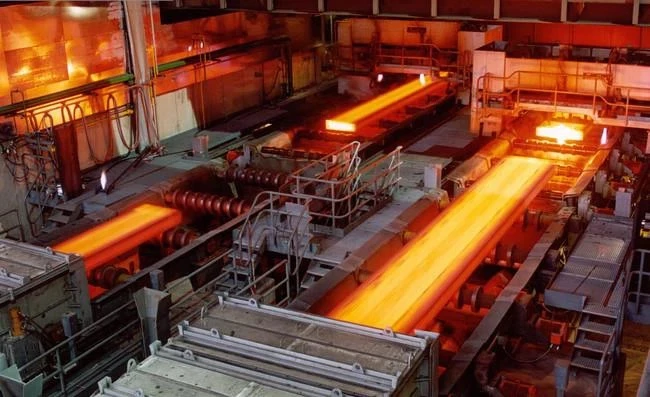
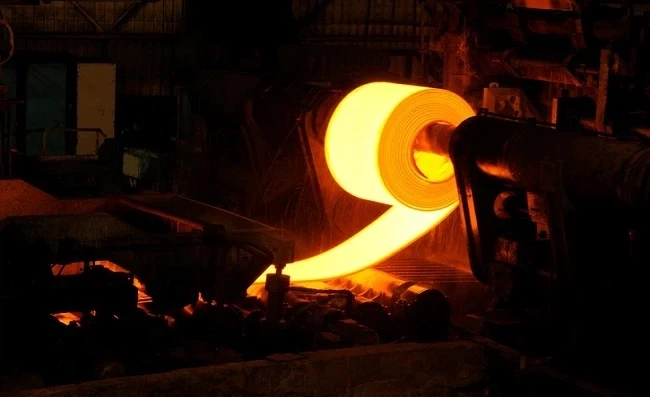
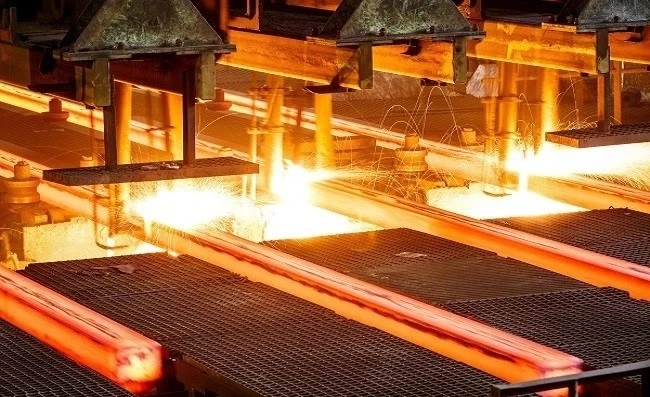
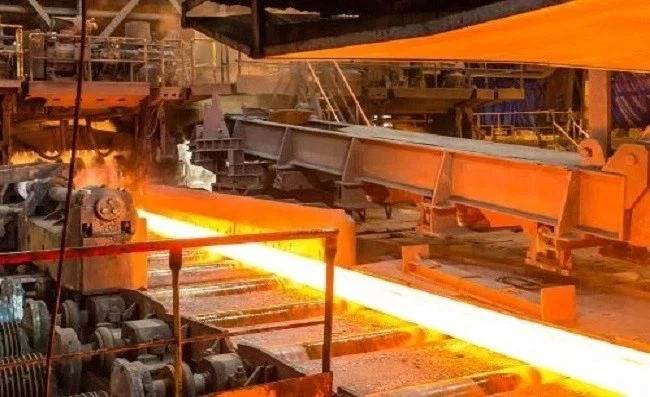
Ti-6Al-4V (Grade 5, TC4) is suitable for high-strength, lightweight, corrosion-resistant, and moderate-temperature applications, and is recommended for use in the following fields:
Application Fields
-
Aerospace (the largest application market, accounting for over 40% of global consumption)
Aircraft structural components (ribs, frames, landing gear parts), compressor disks and blades, fan blades, fasteners, hydraulic tubing, fuselage skins, engine nacelle structures, heat shields, missile casings, rocket structural components. -
Medical and Biomedical Engineering (implant-grade certified)
Hip femoral stems, knee joint components, dental implants, spinal fixation rods and screws, plates and screws, surgical instruments (compliant with ASTM F136 / ISO 5832-3). -
Marine and Shipbuilding
Ship propellers, shafts, seawater heat exchanger tube plates, deep-sea submersible pressure hulls, seawater pump and valve components, sonar domes, ship seawater piping systems. -
Automotive and High-Performance Racing
High-performance engine connecting rods, valves, spring seats, exhaust system hangers, chassis suspension components, lightweight wheel bolts, turbocharger components. -
Petrochemical and Energy
Heat exchanger tubes, reactor internals, valves, piping systems (including acidic medium conditions), electrochemical anodes, nuclear reactor cooling pump components. -
Sports and Consumer Products
Golf club heads, bicycle frames, tennis racket frames, eyeglass frames, watch cases, outdoor equipment. -
Nuclear Industry
Nuclear reactor fuel assembly structural components, cooling system parts (due to low neutron absorption cross-section and corrosion resistance). -
Military and Defense
Armor plates, missile casings, torpedo components, personal protective equipment, unmanned aerial vehicle structural components.
Delivery and Customization
We offer flexible and reliable supply chain solutions to ensure you receive Ti-6Al-4V (Gr5, TC4) materials that perfectly match your project requirements.
|
Form |
 Sheet/Plate
|
 Bar/Rod
|
 Pipe / Tube
|
 Strip/Sheet Coil
|
 Wire/Wire Rod
|
|---|---|---|---|---|---|
|
Conventional Range |
Thickness: 0.5 - 100 mm |
Diameter Φ6-500mm |
Outer diameter Φ10-300mm |
Thickness: 0.1 – 3.0 mm |
Diameter Φ0.5-10mm |
|
Customization Capability |
Hot-rolled or cold-rolled plates, ultra-thin plates (starting from 0.1mm), fixed-length cutting, special surface treatments (pickling, sandblasting, polishing) |
Large-sized forged bars (up to Φ800 mm), hot-rolled bars, polished bars, special-shaped bars, and different heat treatment conditions (annealing, STA) |
Seamless tubes/welded tubes, large-diameter thick-walled tubes, tube end processing (beveling, fixed length), special lengths |
Precision strip materials, stamping coil stock, laminated blanking, non-standard width, special protective film, electrolytic polishing |
Precision drawing, welding filler wires, 3D printing filaments, special surface treatments (polishing, acid washing) |
Why Choose Us? - Reliable Engineering Technology. Dependable Delivery.
We are not just a supplier, but a trusted materials partner for you in China.

Vertically Integrated Production
Own 20,000㎡ facility with 10+ automated lines (8,000+ tons/year). In-house tooling & die center enables rapid customization and effective cost control - no middleman markup.

Strict Quality Control at Every Stage
Full traceability across key QC checkpoints throughout production. 100% compliant with ASTM/ASME, EN, and GB standards. Material test reports available with every shipment.

Reliable Delivery & Export Packaging
10+ years exporting to Europe, North America, Southeast Asia & Middle East with waterproof and anti-rust protection, combined with flexible shipping options ensures safe and on-time arrival.

Sample Validation Before Mass Production
We provide free samples for quality verification, allowing you to place bulk orders only after approval. We ensure consistency from sample to mass production by accurate dimensional measurement and transparent manufacturing.
FAQ
Q: What are the main advantages of Ti-6Al-4V?
Q: What kind of heat treatment does Ti-6Al-4V require?
Q: What is the maximum operating temperature?
Q: What is the difference between Ti-6Al-4V and pure titanium (Grade 2)? How to choose between them?
Q: What is the welding performance of Ti-6Al-4V? What should be noted?
Q: Can Ti-6Al-4V be used as a substitute for other titanium alloys?
Hot Tags: ti-6al-4v (gr5, tc4), China ti-6al-4v (gr5, tc4) manufacturers, suppliers, factory


