Products Features

Extremely Low Coefficient of Thermal Expansion (Core Advantage)
The core advantage of INVAR lies in its extremely low coefficient of thermal expansion. Within the temperature range of -100°C to +200°C, its average linear expansion coefficient is as low as 1.2 × 10⁻⁶ /°C to 1.8 × 10⁻⁶ /°C, significantly lower than that of ordinary carbon steel (approximately 11 × 10⁻⁶ /°C) and austenitic stainless steel (approximately 16 × 10⁻⁶ /°C). In the room temperature to 100°C interval, its expansion coefficient can be as low as 0.8 × 10⁻⁶ /°C to 1.2 × 10⁻⁶ /°C, and even approach zero expansion within specific temperature ranges. This property makes it irreplaceable in applications with extremely high requirements for dimensional thermal stability, such as precision measuring instruments, laser resonators, and satellite structural components.

Good plasticity and processing performance
INVAR exhibits good plasticity and workability in the annealed state, with an elongation of up to 30% to 40% and a high reduction of area. It can undergo various cold forming processes such as cold rolling, cold drawing, stamping, and bending, and can also be manufactured into various forms like plates, strips, wires, and tubes through conventional machining methods such as turning, milling, and drilling. It has a strong tendency to work harden, so it is recommended to use sharp tools and appropriate cutting parameters.

Excellent low-temperature mechanical properties
INVAR does not undergo ductile-to-brittle transition in low-temperature environments and maintains good strength and toughness even at -196°C (liquid nitrogen temperature), without experiencing low-temperature brittle fracture. This property makes it a core material for liquefied natural gas (LNG) carriers and storage tanks-since LNG is stored at approximately -162°C, where ordinary steel would experience severe cold contraction. INVAR's low coefficient of thermal expansion significantly reduces cold contraction stress, ensuring the structural safety of the storage tanks.

Good dimensional stability and organizational stability
INVAR can achieve a stable austenitic microstructure and excellent dimensional stability through optimized heat treatment processes (annealing + stabilization). During long-term service, its dimensional changes are minimal, making it suitable for precision instruments and metrological standards that require strict long-term reliability and dimensional stability. Stabilization treatment (holding at 300-400°C for 10-20 hours) effectively eliminates residual stresses, reducing dimensional drift during subsequent use.
Good welding performance
INVAR can be joined using methods such as TIG welding, resistance welding, and electron beam welding. When welding, it is recommended to use filler wire of the same INVAR material to ensure that the low expansion properties of the weld seam are consistent with the base material. Stress-relief annealing is typically required after welding to eliminate grain growth or precipitated phases that may occur in the heat-affected zone, thereby preventing changes in the local coefficient of thermal expansion.
Technical Specifications
Chemical Composition (ASTM F1684 / GB/T 15018) Remaining Quantity
|
Element |
Standard Requirements |
Notes |
|
Ni |
35.0 - 37.0% |
The key element, with approximately 36% nickel content, is crucial for achieving the low expansion property, determining the Curie point and the invar effect. |
|
Fe |
Remaining quantity (About 64%) |
Matrix elements that form a face-centered cubic (FCC) austenitic structure with nickel |
|
C |
≤ 0.05% |
Strictly control to prevent the formation of carbides, which can damage dimensional stability |
|
Mn |
≤ 0.60% |
Strict control; excessive levels will slightly increase the expansion coefficient |
|
Si |
≤ 0.30% |
Strict control |
|
P |
≤ 0.020% |
Impurity elements, when excessive, can impair low-temperature toughness and hot workability. |
|
S |
≤ 0.020% |
Impurity elements, strictly controlled |
|
Co |
≤ 1.0% |
Trace elements, which usually exist as impurities |
|
Cr |
≤ 0.50% |
Trace elements, which usually exist as impurities |
|
Cu |
≤ 0.50% |
Trace elements, which usually exist as impurities |
Physical Properties
|
Property |
Value/Range |
Test Conditions |
|
Density |
8.05 g/cm³ |
Room Temperature (20°C) |
|
Melting Point |
1427 - 1430°C |
- |
|
Curie temperature |
230°C (535°F) |
The low expansion property disappears after this temperature. |
|
Thermal Conductivity (20°C) |
10 - 13 W/(m·K) |
- |
|
Resistivity |
0.78 - 0.82 μΩ·m |
Room Temperature |
|
Specific Heat Capacity |
515 J/(kg·K) |
Room Temperature |
|
Elastic modulus (Young's modulus) |
140 - 150 GPa |
Room Temperature |
|
Magnetism |
Ferromagnetism (below the Curie point) |
The Curie point is approximately 230°C, above which it transitions to paramagnetism. |
Mechanical Properties (Annealed Condition, Typical Values)
|
Property |
Typical Value |
Specification |
|
Tensile Strength |
450 - 550 MPa |
ASTM B348 |
|
Yield Strength (0.2% Offset) |
240 - 310 MPa |
ASTM B348 |
|
Elongation |
≥ 30% (Typical 35-40%) |
ASTM B348 |
|
Reduction of cross-sectional area |
≥ 40% |
- |
|
Hardness |
120 - 150 HV / ≤ 70 HRB |
- |
Note: After cold deformation, the strength of INVAR can be significantly increased (tensile strength up to 800-1000 MPa), but its ductility correspondingly decreases. Materials in the cold-worked condition are suitable for applications with higher strength requirements.
Thermal Expansion Performance (Core Performance Indicator)
|
Temperature Range |
Average Linear Expansion Coefficient (×10⁻⁶ /°C) |
Note |
|
20 - 50°C |
0.6 |
Near-zero expansion range |
|
20 - 100°C |
0.8 - 1.8 |
Core Advantages Temperature Range |
|
20 - 200°C |
1.7 - 2.0 |
- |
|
20 - 300°C |
4.9 - 5.1 |
As it approaches the Curie point, the coefficient of expansion increases |
|
20 - 400°C |
7.8 - 8.0 |
The coefficient of expansion increases sharply after exceeding the Curie point |
|
20 - 500°C |
9.7 - 10.0 |
Return to normal thermal expansion behavior |
Note: The low expansion property of INVAR relies on its ferromagnetism. Once the temperature exceeds the Curie point (approximately 230°C), the magnetostriction effect disappears, and the coefficient of thermal expansion increases sharply to a level comparable to that of ordinary steel (about 12 × 10⁻⁶ /°C to 15 × 10⁻⁶ /°C). Therefore, it is not suitable for high-temperature environments.
Applicable Media
1. Atmospheric Environment: Corrosion resistance is better than that of ordinary carbon steel and approaches the level of austenitic stainless steel.
2. Freshwater and Weakly Acidic Media: Good corrosion resistance.
3. Low-Temperature Fluids: Such as liquid nitrogen (-196°C) and liquefied natural gas (LNG, -162°C).
4. Vacuum Environment: Suitable for spacecraft structural components and precision instruments.
5. Precision Instrument Oil and Insulating Media: Good compatibility.
Note: INVAR is susceptible to pitting and stress corrosion cracking in sulfur-containing or salt spray environments. When exposed to moist or corrosive environments for extended periods, surface protection treatments such as electroplating (e.g., nickel plating, zinc plating) or painting are recommended.
High-temperature performance
The thermal expansion behavior of INVAR is one of its most critical performance indicators. Below are typical reference values for how the thermal expansion coefficient changes with temperature:
|
Temperature Range |
Average Linear Expansion Coefficient (×10⁻⁶ /°C) |
Note |
|
20 - 50°C |
0.6 |
Near-Zero Inflation |
|
20 - 100°C |
0.8 - 1.8 |
Core operating temperature range |
|
20 - 200°C |
1.7 - 2.0 |
- |
|
20 - 300°C |
4.9 |
The coefficient of expansion rises significantly above 200°C |
Long-term Thermal and Dimensional Stability:
INVAR exhibits good microstructural stability and minimal dimensional changes when in service at temperatures ≤ 200°C for extended periods. However, minor dimensional changes (age shrinkage) may occur during long-term storage at room temperature. It is recommended to perform stabilization treatment (holding at 300-400°C for 10-20 hours) on high-precision parts to eliminate residual stresses, stabilize the austenitic structure, and reduce dimensional drift during subsequent use. Notably, INVAR is highly sensitive to cooling rates during heat treatment. Rapid cooling can lead to austenite supersaturation, resulting in precipitation phase transformation during later use and causing changes in the coefficient of thermal expansion.
Heat treatment system
The heat treatment of INVAR has a decisive impact on the final microstructural stability and dimensional accuracy, with common specifications as follows:
1. Annealing (to relieve machining stress and stabilize microstructure): Heat to 815-830°C (1525°F), hold for 0.5 hours per inch of thickness, furnace cool at a rate ≤ 200°F per hour, and air cool after cooling below 600°F.
2. Stabilization Treatment (Recommended for High-Precision Parts): Hold at 300-400°C for 10-20 hours, then cool slowly to room temperature to eliminate residual stresses, stabilize the austenitic microstructure, and minimize dimensional drift.
3. Stress Relief Treatment (After Machining): Hold at 200-300°C for 1-2 hours, then air cool to prevent deformation caused by cutting stresses.
Note: INVAR is highly sensitive to cooling rates during heat treatment. All heat treatments must be performed using slow cooling methods; rapid cooling (such as water quenching) may lead to unstable microstructure and subsequent dimensional changes.
Workability
INVAR has good machinability, but attention should be paid to its tendency for work hardening:
|
Processing Method |
Recommended Parameters/Methods |
Notes |
|
Cold Working |
Cold rolling, cold drawing, stamping, bending |
The annealed state offers the best formability. Pay attention to springback. |
|
Mechanical machining |
Turning, milling, drilling |
Select sharp cutting tools and appropriate cutting parameters, and pay attention to work hardening. |
|
Welding |
TIG welding, resistance welding, electron beam welding |
It is recommended to use INVAR filler wire of the same material, followed by stress-relief annealing after welding |
|
Hot working |
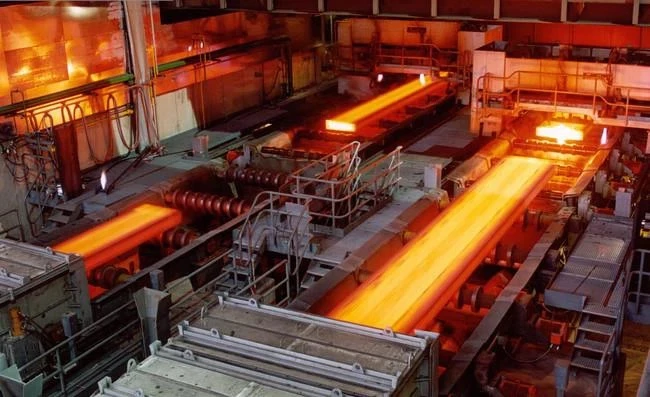
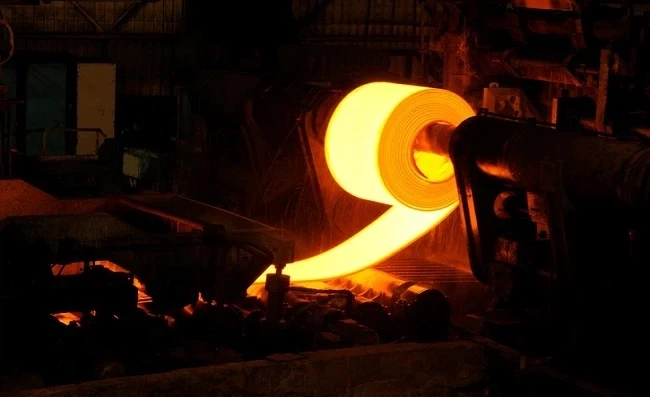
Forging, hot rolling |
The temperature range is narrow (850-1200°C), and it is strictly controlled. |
|
Chemical Etching |
Can be performed |
Suitable for precision thin plate processing |
INVAR (4J36) is designed for precision applications with extremely high dimensional stability requirements and is recommended for use in the following fields:
Application Fields
-
Precision Instruments and Metrology Equipment (Classic Applications)
Metrology standards for length measurement (gauge blocks, ruled scales, geodetic baseline scales), precision optical instruments (interferometers, spectrometers, microscopes), laser equipment (laser resonators, beam guidance systems), telescope barrels and support structures. INVAR's low expansion characteristics ensure that instruments maintain geometric accuracy and optical alignment stability across different environmental temperatures. -
Aerospace
Satellite camera structural components, spacecraft thermal control system support parts, rocket engine fuel line compensators, gyroscope housings, accelerometer structural components, maintaining dimensional stability in extreme space temperature environments (-200°C to +150°C). -
Cryogenics and LNG Storage & Transportation (Core Application)
Inner walls of membrane-type LNG storage tanks on LNG carriers (cargo containment systems), LNG tank support structures, cryogenic thermostats, superconducting magnet support structures. INVAR maintains extremely low thermal contraction at the -162°C LNG storage temperature, preventing tank cracking. -
Electronics and Telecommunications Industry
Microwave resonators, filter enclosures, oscillator housings and supports, integrated circuit package lead frames, wafer stage and workpiece table support frames of lithography machines, ensuring frequency stability and nanometer-level positioning accuracy. -
Semiconductor and Precision Manufacturing
Precision positioning platforms of semiconductor lithography machines, vacuum chambers in ion implanters and etchers, high-precision injection mold cores and cavities. -
Quantum Technology and Research
Inner walls of dilution refrigerators' cryostats for quantum computing, atomic clock structural components, particle detector support structures, spectrometer magnetic circuits. -
Automotive and Mechanical Manufacturing
High-precision injection molds, die-casting mold cores, precision gauges and inspection fixtures, low-expansion elements of bimetallic strips. -
Bimetallic Elements
As the low-expansion layer material for bimetallic strips, combined with a high-expansion layer to form bimetallic sheets used in temperature measuring and controlling devices.
Delivery and Customization
We offer flexible and reliable supply chain solutions to ensure you receive INVAR(4J36) materials that perfectly match your project requirements.
|
Form |
 Sheet/Plate
|
 Bar/Rod
|
 Pipe / Tube
|
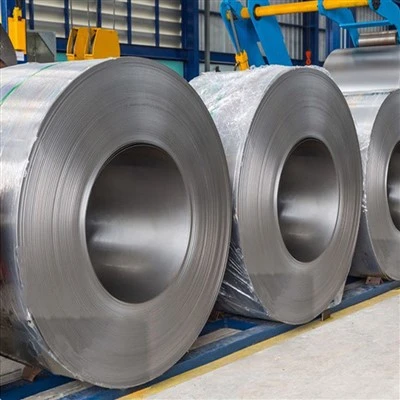
 Strip/Sheet Coil
|
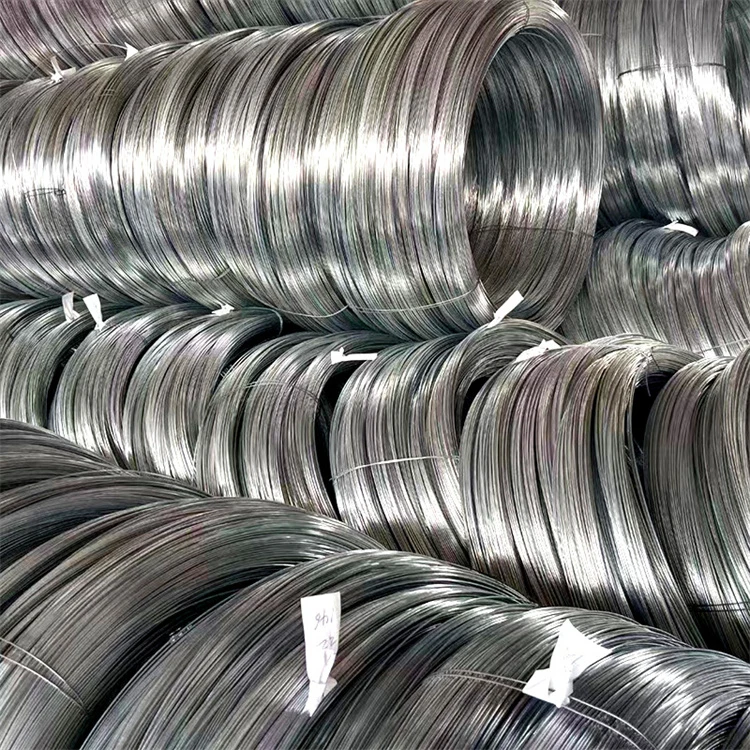
 Wire/Wire Rod
|
|---|---|---|---|---|---|
|
Conventional Range |
Thickness: 0.5 - 100 mm |
Diameter Φ6-500mm |
Outer diameter Φ10-300mm |
Thickness: 0.05 – 3.0 mm |
Diameter Φ0.1-10mm |
|
Customization Capability |
Hot-rolled or cold-rolled plates, ultra-thin plates (starting from 0.1mm), stamped parts, length-cutting to specified dimensions, special surface treatments (pickling, polishing) |
Forged bars, hot-rolled bars, polished bars, shaped bars, and different heat treatment conditions (annealing, stabilization) |
Seamless tubes/welded tubes, fixed-length cutting, dedicated for low-temperature piping |
Precision strip materials, stamping coil stock, laminated blanking, non-standard width, special protective film |
Precision drawing, welding filler wire, special surface treatment |
Why Choose Us? - Reliable Engineering Technology. Dependable Delivery.
We are not just a supplier, but a trusted materials partner for you in China.

Vertically Integrated Production
Own 20,000㎡ facility with 10+ automated lines (8,000+ tons/year). In-house tooling & die center enables rapid customization and effective cost control - no middleman markup.

Strict Quality Control at Every Stage
Full traceability across key QC checkpoints throughout production. 100% compliant with ASTM/ASME, EN, and GB standards. Material test reports available with every shipment.

Reliable Delivery & Export Packaging
10+ years exporting to Europe, North America, Southeast Asia & Middle East with waterproof and anti-rust protection, combined with flexible shipping options ensures safe and on-time arrival.

Sample Validation Before Mass Production
We provide free samples for quality verification, allowing you to place bulk orders only after approval. We ensure consistency from sample to mass production by accurate dimensional measurement and transparent manufacturing.
FAQ
Q: What are the main advantages of INVAR?
Q: What is the difference between INVAR (4J36) and ordinary stainless steel?
Q: How does INVAR work? Why is its coefficient of thermal expansion so low?
Q: What kind of heat treatment does INVAR require?
Q: What are the highest and lowest usage temperatures for INVAR?
Q: What is the welding performance of INVAR?
Q: Can INVAR replace other low-expansion alloys?
Hot Tags: invar, China invar manufacturers, suppliers, factory