

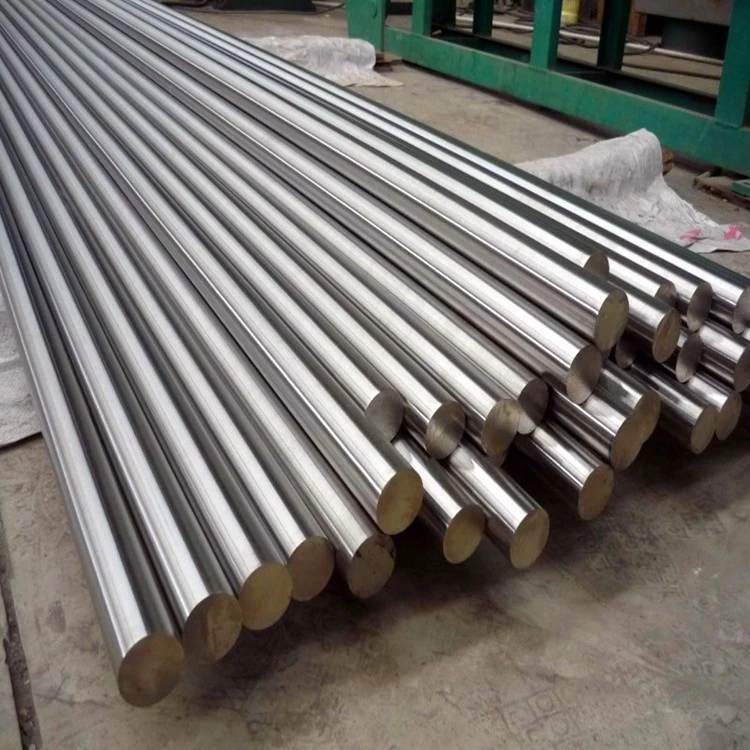


Products Features

Excellent High-Temperature Strength and Creep Resistance
Haynes 188 demonstrates outstanding tensile strength, yield strength, and creep resistance in the temperature range of 600-1000°C due to solid solution strengthening (tungsten) in the cobalt matrix and dispersion strengthening by carbides. It retains high creep rupture strength even at 1000°C, making it suitable for components like turbine combustion chambers, transition ducts, and guide vanes that are subjected to prolonged high-temperature stress.

Superior Oxidation and Thermal Corrosion Resistance
The high chromium content (approximately 22%) promotes the formation of a dense, stable Cr₂O₃ oxide film on the alloy surface, effectively preventing base metal oxidation in oxidizing atmospheres up to 1100°C. Additionally, the added lanthanum significantly enhances the adhesion and spallation resistance of this oxide film, resulting in oxidation resistance superior to most cobalt-based and nickel-based high-temperature alloys. The cobalt matrix provides good resistance to thermal corrosion media such as sulfur and vanadium, particularly suitable for gas turbine environments using sulfur-containing fuels.

Good Microstructural Stability and Thermal Fatigue Resistance
Haynes 188 maintains microstructural stability during long-term high-temperature service with extremely low tendency for precipitation of harmful phases (such as sigma phase). It possesses excellent thermal fatigue resistance. Even under conditions of frequent temperature fluctuations, its mechanical and oxidation properties remain stable, making it suitable for components in gas turbines and industrial furnaces with frequent start-up and shutdown cycles.

Good Fabrication and Welding Properties
Haynes 188 has good hot and cold workability and can be forged, rolled, and formed using conventional processes. It exhibits excellent weldability and is compatible with various welding methods including Gas Tungsten Arc Welding (GTAW), plasma welding, and resistance welding without requiring special post-weld heat treatment. Conventional machining (turning, milling, drilling) is applicable; hard metal cutting tools are recommended.
Technical Specifications
Chemical Composition
|
Element |
Standard Requirements |
Notes |
|
Co |
Remaining quantity(37-40%) |
Matrix elements that provide high-temperature strength, thermal stability, and excellent thermal corrosion resistance |
|
Cr |
20.0 --- 24.0% |
Form a dense Cr₂O₃ protective film, providing oxidation and thermal corrosion resistance |
|
Ni |
20.0 --- 24.0% |
Stabilize the austenitic structure, improve toughness and machinability |
|
W |
13.0 --- 16.0% |
Provides significant solid solution strengthening and carbide strengthening, enhancing high-temperature creep resistance |
|
Fe |
≤ 3.0% |
Strict control to ensure purity and organizational stability |
|
C |
0.05 --- 0.15% |
Forming carbides with chromium and tungsten, it is the core source of high-temperature strength. |
|
Mn |
≤ 1.25% |
Deoxidizer, improve hot working properties |
|
Si |
≤ 0.50% |
Deoxidizer |
|
P |
≤ 0.020% |
Impurity elements |
|
S |
≤ 0.015% |
Prevent hot brittleness |
|
La |
0.02 --- 0.12% |
Minor additions significantly improve the adhesion of the oxide film and its oxidation resistance |
Physical Properties
|
Property |
Value/Range |
Test Conditions |
|
Density |
8.98 g/cm³ |
Room temperature (20°C) |
|
Melting Point |
1300 --- 1410°C |
- |
|
Coefficient of Thermal Expansion (20-100°C) |
12.4 × 10⁻⁶ /K |
- |
|
Elastic modulus (Young's modulus) |
220 --- 230 GPa |
Room temperature |
|
Thermal conductivity (20°C) |
9.5 W/(m·K) |
- |
|
Resistivity |
0.90 μΩ·m |
Room temperature |
|
Magnetism |
Non-magnetic (weakly magnetic) |
Cobalt-based alloys are typically non-magnetic or weakly magnetic at room temperature |
Mechanical Properties (Annealed Condition, Typical Values)
|
Property |
Typical Value |
Specification |
|
Tensile Strength |
≥ 945 MPa |
AMS 5608 |
|
Yield Strength (0.2% Offset) |
≥ 460 MPa |
AMS 5608 |
|
Elongation |
≥ 50% |
AMS 5608 |
|
Hardness |
≤ 100 HRB(Annealed state) |
--- |
Note: Strength can be significantly increased after cold working, but elongation decreases.
High-temperature performance
Haynes 188 exhibits excellent strength retention at high temperatures. Below are typical reference values:
|
Temperature |
Tensile Strength (Typical Value) |
Sustained Strength (100h, Typical Value) |
|
Room Temperature |
≥ 945 MPa |
--- |
|
540°C |
900 MPa |
--- |
|
730°C |
750 MPa |
230 MPa |
|
870°C |
550 MPa |
130 MPa |
|
1000°C |
350 MPa |
60 MPa |
|
1100°C |
200 MPa |
--- |
Antioxidant Performance:
In oxidizing atmospheres up to 1100°C, Haynes 188 forms a dense and highly adherent Cr₂O₃ oxide layer (thanks to lanthanum microalloying), resulting in a significantly lower oxidation weight gain rate compared to conventional stainless steels and most cobalt-based alloys. In environments involving the combustion of sulfur-containing fuels, its thermal corrosion resistance exceeds that of many iron-based and nickel-based high-temperature alloys.
Microstructural Stability:
During long-term exposure between 600-1100°C, the carbide structure of Haynes 188 remains stable, with a very low tendency for harmful phase precipitation. This ensures its mechanical properties and toughness during prolonged high-temperature service.
Suitable Media:
High-temperature air, combustion flue gases (sulfur and vanadium containing)
High-temperature oxidizing atmospheres
Thermal corrosion environments (containing Na₂SO₄, V₂O₅, etc.)
High-temperature gases (flow path environment of gas turbines)
Note: Haynes 188 is primarily intended for high-temperature gaseous media environments and is not suitable for aqueous corrosion environments.
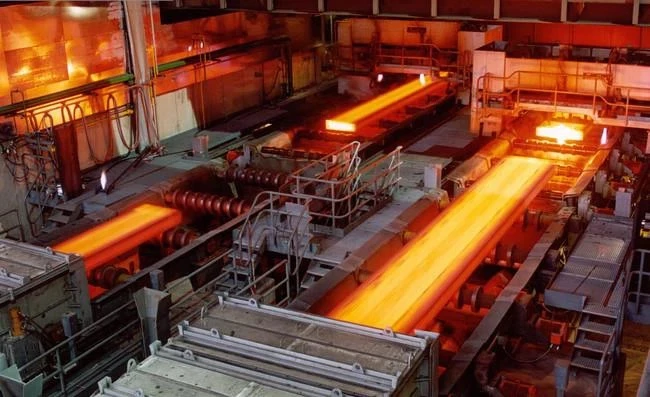
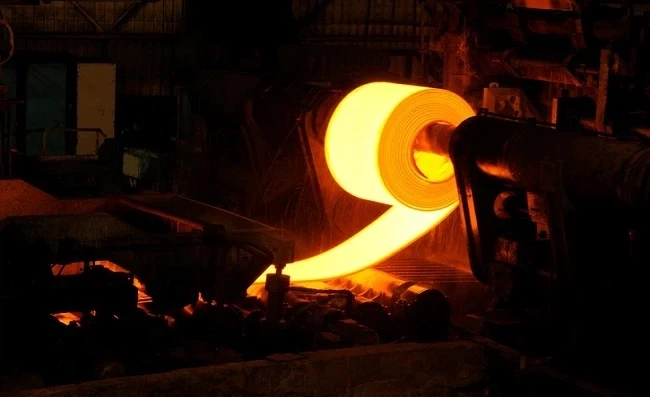
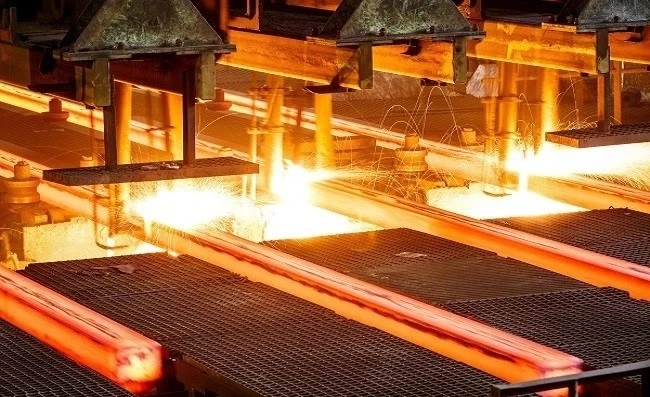
Haynes 188 is specifically designed for extreme high-temperature, oxidation, and thermal corrosion environments and is recommended for the following fields:
Application Fields
-
Aerospace: Gas turbine combustor chambers, flame tubes, transition ducts, afterburner components, high-temperature seals, and guide vanes.
-
Industrial Gas Turbines: Hot-end components such as combustor parts, transition sections, turbine seal rings, and guide vanes.
-
High-Temperature Industrial Furnaces: Furnace rolls, radiation tubes, heat treatment fixtures, baskets, furnace bottom plates, and high-temperature conveyor belts.
-
Petrochemical Industry: Ethylene cracking furnace tubes, high-temperature reactor internals, high-temperature wear-resistant components of catalytic cracking units, and heating furnace tubes.
-
Power Generation: High-temperature fasteners for steam turbines, boiler burner nozzles, and high-temperature corrosion-resistant components in waste-to-energy power plants.
-
Automotive Engines: High-performance turbocharger turbine housings, exhaust manifold gaskets, and high-temperature bolts.
-
Nuclear Industry: Components of high-temperature gas-cooled reactors and internal reactor structures.
-
Glass and Ceramic Industries: Glass forming molds, hot pressing molds, and glass fiber drawing orifice plates.
Delivery and Customization
We offer flexible and reliable supply chain solutions to ensure you receive Haynes 188 materials that perfectly match your project requirements.
|
Form |
 Sheet/Plate
|
 Bar/Rod
|
 Pipe / Tube
|
 Strip/Sheet Coil
|
 Wire/Wire Rod
|
Forging
|
Precision Castings
|
|---|---|---|---|---|---|---|---|
|
Conventional Range |
Thickness: 0.5 - 100 mm |
Diameter Φ6-500mm (customizable to larger sizes) |
Outer diameter Φ10-300mm |
Thickness: 0.1 – 3.0 mm |
Diameter Φ0.5-10mm |
Customize according to the drawings |
Customize according to the drawings |
|
Customization Capability |
Combustion chamber components, heat shields, furnace liners |
High-temperature bolts, valve stems, turbine blades, and shaft components |
High-temperature furnace tubes, heat exchanger tube bundles, nuclear reactor cooling tubes |
Bellows, precision stampings, gaskets |
Welding wires (TIG/ MIG), springs, mesh belt weaving |
Turbo disks, ring parts, and complex high-temperature load-bearing components |
Guide vanes, turbine seal rings, combustion chamber components |
Why Choose Us? - Reliable Engineering Technology. Dependable Delivery.
We are not just a supplier, but a trusted materials partner for you in China.

Vertically Integrated Production
Own 20,000㎡ facility with 10+ automated lines (8,000+ tons/year). In-house tooling & die center enables rapid customization and effective cost control - no middleman markup.

Strict Quality Control at Every Stage
Full traceability across key QC checkpoints throughout production. 100% compliant with ASTM/ASME, EN, and GB standards. Material test reports available with every shipment

Reliable Delivery & Export Packaging
10+ years exporting to Europe, North America, Southeast Asia & Middle East with waterproof and anti-rust protection, combined with flexible shipping options ensures safe and on-time arrival.

Sample Validation Before Mass Production
We provide free samples for quality verification, allowing you to place bulk orders only after approval. We ensure consistency from sample to mass production by accurate dimensional measurement and transparent manufacturing.
FAQ
Q: What are the main advantages of Haynes 188?
Q: What heat treatment is required for Haynes 188?
Q: What is the maximum service temperature?
Q: What is the difference between Haynes 188 and Hastelloy X?
Hot Tags: haynes 188, China haynes 188 manufacturers, suppliers, factory


