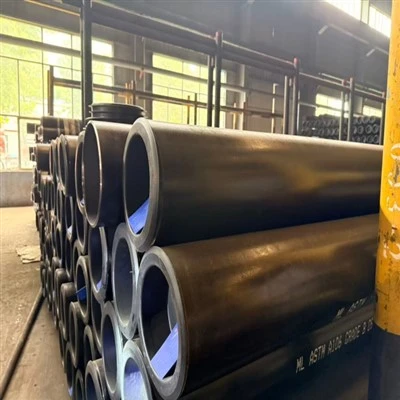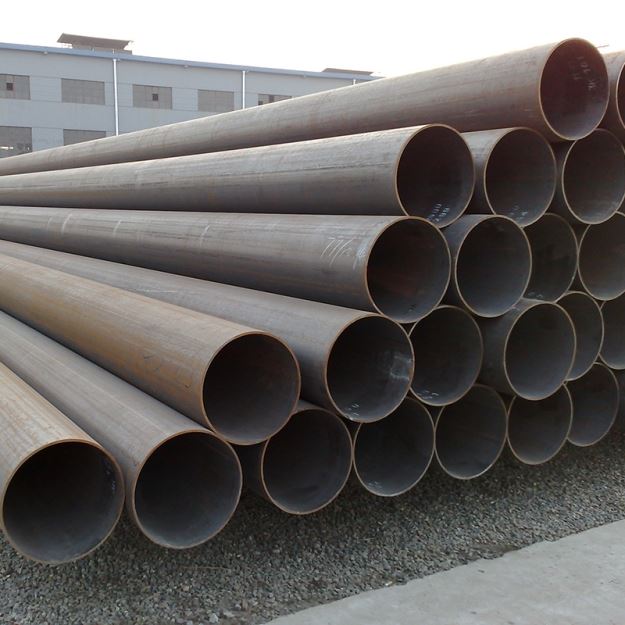
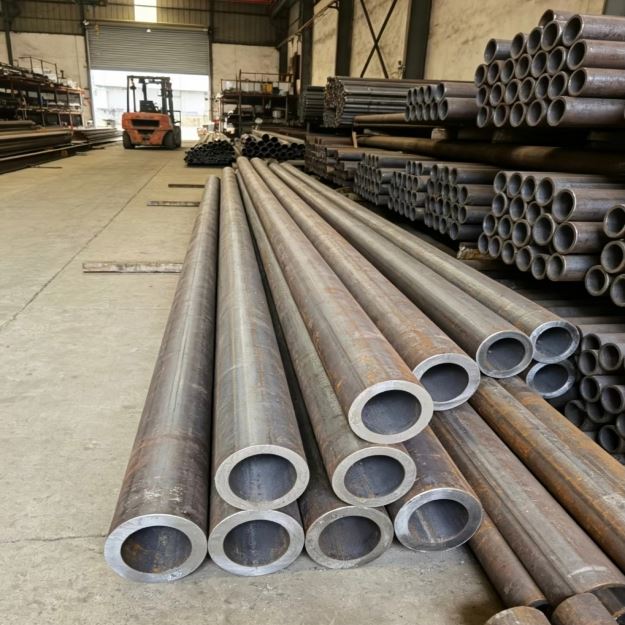
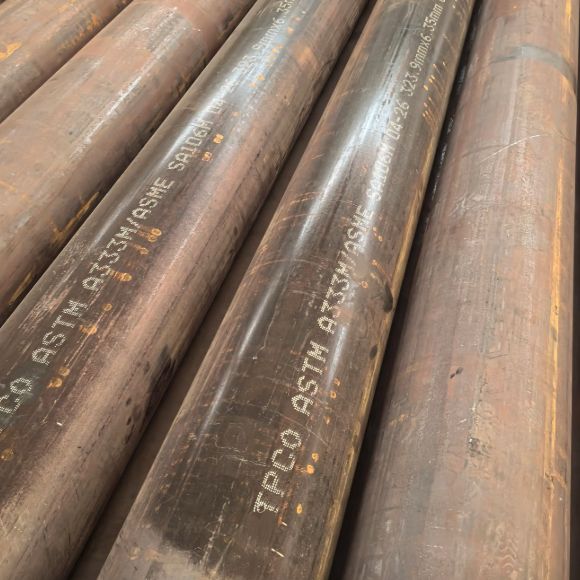
Products Features

Excellent low-temperature impact toughness (core advantage)
The core advantage of ASTM A333 lies in its excellent low-temperature impact toughness. This specification mandates Charpy V-notch impact testing of the material at specified low temperatures, ensuring sufficient resistance to brittle fracture under low-temperature service conditions. Grade 6 has an average impact energy of ≥ 18J and a minimum single value of ≥ 13J at -46°C, effectively mitigating the risk of brittle fracture in materials at low temperatures and ensuring the safety and reliability of pipelines during low-temperature service.

Good welding performance
The low carbon equivalent design of ASTM A333 ensures good weldability with a mature welding process, making it suitable for large-scale on-site installation. When welding low-temperature steel, strict control of heat input is required to prevent a decrease in the toughness of the heat-affected zone. Preheating is generally not necessary before welding (except for thick-walled pipes or in low-temperature environments), and post-weld heat treatment at 600-650°C can be optionally performed after welding to relieve residual stresses.

Good machinability
It can undergo various forming processes such as hot bending, cold bending, and forging, making it suitable for manufacturing pipe fittings like elbows, tees, and reducers. It can also be machined using conventional machining methods. It should be noted that Grades 3 (3.5% Ni) and 8 (9% Ni), due to their higher nickel content, have a slightly higher tendency for work hardening compared to Grade 6.

Mature technology and long-term reliability
It exhibits good organizational stability during long-term service within their respective applicable temperature ranges (Grade 6 ≤ -46°C / Grade 3 ≤ -101°C / Grade 8 ≤ -196°C). Delivered in normalized or normalized plus tempered condition, it achieves a uniform and fine microstructure, ensuring organizational stability and reliability under low-temperature service conditions.
Technical Specifications
Chemical Composition(ASTM A333 / ASME SA333)
|
Element |
Grade 1 |
Grade 3 |
Grade 4 |
Grade 6 |
Grade 7 |
Grade 8 |
Grade 9 |
Note |
|
C |
≤ 0.30% |
≤ 0.19% |
≤ 0.12% |
≤ 0.30% |
≤ 0.19% |
≤ 0.13% |
≤ 0.20% |
Ensure low-temperature toughness and weldability |
|
Mn |
0.40-1.06% |
0.31-0.64% |
0.50-1.05% |
0.29-1.06% |
≤ 0.90% |
≤ 0.90% |
0.40-1.06% |
Solid solution strengthening, improve strength |
|
P |
≤ 0.035% |
≤ 0.035% |
≤ 0.035% |
≤ 0.035% |
≤ 0.035% |
≤ 0.035% |
≤ 0.035% |
Harmful elements, strictly controlled |
|
S |
≤ 0.035% |
≤ 0.035% |
≤ 0.035% |
≤ 0.035% |
≤ 0.035% |
≤ 0.035% |
≤ 0.035% |
Harmful elements, strictly controlled |
|
Si |
0.10-0.35% |
0.13-0.32% |
0.18-0.37% |
≥ 0.10% |
0.13-0.32% |
0.13-0.32% |
0.13-0.32% |
Deoxidizer |
|
Ni |
- |
3.18-3.82% |
0.47-0.98% |
- |
2.03-2.57% |
8.40-9.60% |
1.60-2.24% |
Elements of Low-Temperature Toughness |
|
Cr |
- |
- |
0.44-1.01% |
- |
- |
- |
- |
Improve hardenability |
|
Cu |
- |
- |
0.40-0.70% |
- |
- |
- |
- |
Improve corrosion resistance |
|
Mo |
- |
- |
0.40-0.75% |
- |
- |
- |
- |
Enhance high-temperature strength |
|
Fe |
Remaining quantity |
Remaining quantity |
Remaining quantity |
Remaining quantity |
Remaining quantity |
Remaining quantity |
Remaining quantity |
Matrix element |
Physical Properties
|
Performance |
Numerical Value/Range |
Test conditions |
|
Density |
≈ 7.85 g/cm³ |
Room temperature (20°C) |
|
Melting Point |
≈ 1420-1460°C |
- |
|
Elastic modulus |
≈ 200 GPa |
Room temperature |
|
Thermal Conductivity |
≈ 50 W/(m·K) |
Room temperature |
|
Coefficient of thermal expansion (20-100°C) |
≈ 11.7 × 10⁻⁶ /K |
- |
|
Poisson's ratio |
≈ 0.28 |
Room temperature |
|
Magnetism |
Ferromagnetic |
Carbon steel/ low-alloy steel, which is magnetic |
Mechanical Properties (Typical value, ASTM A333)
|
Performance |
Grade 1 |
Grade 3 |
Grade 4 |
Grade 6 |
Grade 7 |
Grade 8 |
Grade 9 |
Specification |
|
Tensile Strength |
≥ 380 MPa |
≥ 450 MPa |
≥ 415 MPa |
≥ 415 MPa |
≥ 450 MPa |
≥ 690 MPa |
≥ 435 MPa |
ASTM A333 |
|
Yield strength |
≥ 205 MPa |
≥ 240 MPa |
≥ 240 MPa |
≥ 240 MPa |
≥ 205 MPa |
≥ 515 MPa |
≥ 315 MPa |
ASTM A333 |
|
Elongation |
≥ 35% |
≥ 30% |
≥ 30% |
≥ 30% |
≥ 30% |
≥ 22% |
≥ 28% |
ASTM A333 |
|
Impact test temperature |
-46°C |
-101°C |
-46°C |
-46°C |
-73°C |
-196°C |
-73°C |
ASTM A333 |
|
Impact Toughness (Average Value) |
≥ 18J |
≥ 18J |
≥ 18J |
≥ 18J |
≥ 18J |
≥ 18J |
≥ 18J |
ASTM A333 |
Note: Note: Grade 6 is the most widely used grade in the ASTM A333 standard, offering an excellent balance between strength, weldability, low-temperature toughness, and cost, suitable for low-temperature service conditions down to -46°C. Grade 3 (3.5% Ni) is applicable for -101°C, and Grade 8 (9% Ni) for -196°C.
Low-temperature Impact Performance (Core Indicator)
|
Grade |
Minimum operating temperature |
Impact test temperature |
Minimum Impact Energy (Average Value) |
Minimum impact energy (single value) |
Typical applications |
|
Grade 1 |
-46°C |
-46°C |
≥ 18J |
≥ 13J |
General low-temperature conditions |
|
Grade 3 |
-101°C |
-101°C |
≥ 18J |
≥ 13J |
LNG, air separation unit |
|
Grade 4 |
-46°C |
-46°C |
≥ 18J |
≥ 13J |
Low-temperature sulfur-containing environment |
|
Grade 6 |
-46°C |
-46°C |
≥ 18J |
≥ 13J |
Most commonly used, preferred for -46°C low-temperature conditions |
|
Grade 7 |
-73°C |
-73°C |
≥ 18J |
≥ 13J |
Lower temperature requirements |
|
Grade 8 |
-196°C |
-196°C |
≥ 18J |
≥ 13J |
LNG storage tanks, liquid nitrogen/ liquid oxygen pipelines |
|
Grade 9 |
-73°C |
-73°C |
≥ 18J |
≥ 13J |
Petrochemical deep cryogenic equipment |
Heat treatment system
Normalizing
Heat to 845-925°C, hold for sufficient time, then air cool. This results in a uniform and fine-grained microstructure, improving low-temperature toughness. The normalizing temperature for Grade 8 is typically 845-900°C, slightly higher than other grades.
Normalizing + Tempering (Recommended for Grade 8)
After normalizing, heat to 565-650°C for tempering, then air cool. This eliminates normalizing stresses and further optimizes low-temperature toughness.
Full Annealing (Optional)
Heat to 815-870°C, hold at temperature, then furnace cool to approximately 650°C, followed by air cooling to room temperature. Used to eliminate cold working stresses or improve cold working formability.
Post-Weld Heat Treatment (PWHT, selected based on wall thickness and operating conditions)
Heat to 600-650°C, hold at temperature, then cool slowly to eliminate residual welding stresses.
Applicable Media
Liquefied Natural Gas (LNG)
LNG receiving terminals, low-temperature pipelines of liquefaction plants (≤ -162°C)
Air separation unit
liquid oxygen, liquid nitrogen, liquid argon pipelines and cold box pipelines
Low-temperature liquids
Transportation of low-temperature media such as liquid ethylene, liquid ammonia, and liquid hydrogen
Petrochemical Deep Cryogenics
Deep Cryogenic Separation of Ethylene Plants, Low-Temperature Process Piping
Low-Temperature Storage Tanks
LNG storage tank pipelines, low-temperature spherical tanks
Note: Each grade of ASTM A333 has different applicable minimum temperature limits. Grade 6 is suitable for temperatures above -46°C, Grade 3 for above -101°C, and Grade 8 for above -196°C. When selecting materials, the appropriate grade should be chosen based on the minimum design temperature. It is not applicable to high-temperature conditions (above 350°C) and strongly corrosive media such as strongly oxidizing acids.
ASTM A333 is suitable for low-temperature service ranging from -46°C to -196°C and is recommended for use in the following areas:
Application Fields
-
LNG receiving terminals and liquefaction plants (core applications, Grade 3 / Grade 8)
● LNG unloading pipelines, vapor (BOG) pipelines
● LNG transportation pipelines (≤ -162°C)
● LNG Tank Accompanying Pipeline System -
Air Separation and Industrial Gases (Core Applications, Grade 6 / Grade 3)
● Liquid Oxygen, Liquid Nitrogen, and Liquid Argon Piping Systems (-183°C ~ -196°C)
● Cold Box Piping Systems for Air Separation Units
● Low-Temperature Piping for Industrial Gas Separation Equipment -
Petrochemical Deep Cryogenics (Core Applications, Grade 6 / Grade 7 / Grade 9)
● Deep Cryogenic Separation Pipelines for Ethylene Cracking Units (-100°C ~ -160°C)
● Low-temperature transportation pipelines for propylene and butadiene
● Low-temperature methanol wash (Rectisol) process piping -
Low-temperature storage and transportation
● Piping system for low-temperature liquid storage tanks
● Filling pipeline system for low-temperature tank trucks
● Pipelines for liquefied gas transport ships -
Low-temperature pipe fittings
● Low-temperature elbows, tees, reducers
● Low-temperature forged pipe fittings, flanges
Delivery and Customization
We offer flexible and reliable supply chain solutions to ensure you receive ASTM A333 low-temperature seamless steel pipes that perfectly match your project requirements.
Customizable material forms
We support producing various basic and special shapes according to drawings or specifications.
|
Form |
 Hot-rolled seamless steel pipe
|
 Cold-drawn seamless steel pipe
|
 Large-diameter thick-walled pipe
|
|---|---|---|---|
|
Conventional Range |
Diameter: 60.3 - 1067 mm; Wall Thickness: 3 - 150 mm |
Outer Diameter: 10.3 - 114.3 mm; Wall Thickness: 1 - 15 mm |
Outer Diameter: 219 - 1067 mm; Wall Thickness: 20 - 150 mm |
|
Customization Capability |
Fixed-length cutting, bevel processing, pipe end threads, normalized/ annealed condition |
Precision Dimension Control, Bright Annealing, Fixed-Length Cutting |
Hot expansion of tubes, fixed-length cutting, bevel machining |
Why Choose Us? - Reliable Engineering Technology. Dependable Delivery.
We are not just a supplier, but a trusted materials partner for you in China.

Vertically Integrated Production
Own 20,000㎡ facility with 10+ automated lines (8,000+ tons/year). In-house tooling & die center enables rapid customization and effective cost control - no middleman markup.

Strict Quality Control at Every Stage
Full traceability across key QC checkpoints throughout production. 100% compliant with ASTM/ASME, EN, and GB standards. Material test reports available with every shipment.

Reliable Delivery & Export Packaging
10+ years exporting to Europe, North America, Southeast Asia & Middle East with waterproof and anti-rust protection, combined with flexible shipping options ensures safe and on-time arrival.

Sample Validation Before Mass Production
We provide free samples for quality verification, allowing you to place bulk orders only after approval. We ensure consistency from sample to mass production by accurate dimensional measurement and transparent manufacturing.
FAQ
Q: What are the main advantages of ASTM A333 Grade 6?
Q: What is the difference between ASTM A333 Grade 6 and ASTM A106 Grade B? How to choose between them?
Q: How to select the commonly used grades of ASTM A333?
Q: What is the minimum service temperature for ASTM A333 Grade 6?
Q: What is the welding performance of ASTM A333 Grade 6?
Q: What is the corrosion resistance of ASTM A333 Grade 6?
Hot Tags: astm a333, China astm a333 manufacturers, suppliers, factory