


Products Features

Good overall performance and high cost-effectiveness (core advantage)
The core advantage of API 5L Gr.B lies in its excellent overall performance and high cost-effectiveness. Thanks to its low-carbon design (carbon content ≤ 0.26%) and moderate alloy content, Gr.B offers lower production costs while ensuring a minimum yield strength of 245 MPa and a minimum tensile strength of 415 MPa. This makes it the most economical basic material choice for pipeline engineering.
|
Performance indicators |
PSL1 Requirements |
PSL2 Requirements |
|
Minimum Yield Strength (MPa) |
245 |
245 |
|
Maximum Yield Strength (MPa) |
- |
450 |
|
Minimum Tensile Strength (MPa) |
415 |
415 |
|
Maximum Tensile Strength (MPa) |
- |
655 |
|
Yield ratio |
- |
Usually ≤ 0.93 |
|
Elongation |
≥ 30% |
≥ 30% |
Note: PSL2 imposes limits on both maximum yield strength and maximum tensile strength (with upper limits of 450 MPa and 655 MPa respectively), ensuring the material has sufficient plastic deformation capability and a higher safety margin.

Excellent welding performance (core requirement for pipeline steel)
The low carbon equivalent design of API 5L Gr.B ensures excellent welding performance, which is a core requirement for large-scale construction of pipeline steels. The PSL2 grade requires a carbon equivalent (CEIIW) ≤ 0.43 and Pcm ≤ 0.25, ensuring good toughness and resistance to cold cracking in the heat-affected zone under field welding conditions.
Key Welding Points:
• Low CE value:
Effectively reduces the tendency of the welding heat-affected zone to harden and lowers the risk of cold cracks
• Low-harmful-element content:
S ≤ 0.030% (PSL1) / ≤ 0.015% (PSL2), ensuring the purity of welds and base metal
• Suitable for various welding methods:
butt welding of seamless steel pipes, submerged arc welding of spiral/straight seam welded pipes, etc., with good field ring welding performance
For PSL1 grade, the upper limit of carbon content is relatively wide (≤ 0.26%), and preheating at 100-150°C is recommended during welding; for PSL2 grade, the carbon content requirement is stricter (≤ 0.16-0.18%), resulting in better weldability and typically no need for special preheating or only requiring a lower preheating temperature.

Good low-temperature toughness and resistance to brittle fracture performance
API 5L Gr.B PSL2 requires Charpy V-notch impact testing to ensure the material's resistance to brittle fracture under low-temperature service conditions. The fine-grained microstructure obtained through normalization or TMCP processes enhances the material's low-temperature toughness, enabling Gr.B pipeline steel to be reliably applied in cold regions and environments with large seasonal temperature variations.
Typical impact toughness index (PSL2):
• Test temperature: Typically -20°C or lower (as per user requirements)
• Minimum impact energy:≥ 27 J (average value) / ≥ 20 J (single value)

Good corrosion resistance and environmental adaptability
API 5L Gr.B exhibits good resistance to uniform corrosion in normal atmospheric, fresh water, soil, and oil and gas media. For acidic service environments (containing H₂S), special grade materials specified in Appendix J of API 5L PSL2 (acid-resistant pipes) should be selected, with additional controls on sulfur content, hardness, and HIC resistance.
For the marine environment, Appendix H and Appendix J of PSL2 provide corresponding material supplementary requirements applicable to offshore platform structural pipes and subsea pipelines.
Good cold bending and processing performance
API 5L Gr.B has a lower carbon content and moderate yield-to-tensile ratio (typically ≤ 0.93 for PSL2), which gives it good cold bending formability. It is suitable for cold bent pipe production and can be used to manufacture hot bends through hot bending processes. It also exhibits good shearing, blanking, and roll forming properties in coil and plate conditions.
Technical Specifications
Chemical Composition(API Spec 5L / ISO 3183)
|
Element |
PSL1 Seamless Tube |
PSL1 Welded Pipe |
PSL2 |
Note |
|
C |
≤ 0.28% |
≤ 0.26% |
≤ 0.16-0.18% |
Low-carbon design to ensure weldability and low-temperature toughness |
|
Mn |
≤ 1.30% |
≤ 1.30% |
≤ 1.30% |
Solid solution strengthening, improve strength |
|
P |
≤ 0.030% |
≤ 0.030% |
≤ 0.025% |
Harmful elements, strictly controlled |
|
S |
≤ 0.030% |
≤ 0.030% |
≤ 0.015% |
Harmful elements, strictly controlled to ensure low-temperature toughness |
|
Si |
≤ 0.45% |
≤ 0.45% |
≤ 0.45% |
Deoxidizer, improve strength |
|
V |
≤ 0.05% |
≤ 0.05% |
≤ 0.05% |
Microalloying elements, precipitation strengthening |
|
Nb |
≤ 0.05% |
≤ 0.05% |
≤ 0.05% |
Microalloying elements, controlled rolling for fine grain |
|
Ti |
≤ 0.04% |
≤ 0.04% |
≤ 0.04% |
Microalloying elements, precipitation strengthening |
|
CEIIW |
- |
- |
≤ 0.43% |
Carbon equivalent, controlling weldability |
|
Pcm |
- |
- |
≤ 0.25% |
Crack Sensitivity Index |
|
Fe |
Remaining quantity (≈ 97%) |
Remaining quantity (≈ 97%) |
Remaining quantity (≈ 97%) |
Matrix element |
Physical Properties
|
Property |
Value/Range |
Test Conditions |
|
Density |
≈ 7.85 g/cm³ |
Room Temperature (20°C) |
|
Melting Point |
≈ 1420-1460°C |
--- |
|
Elastic modulus |
≈ 207 GPa |
Room Temperature |
|
Thermal Conductivity |
≈ 50 W/(m·K) |
Room Temperature |
|
Coefficient of Thermal Expansion (20-100°C) |
≈ 12.0 × 10⁻⁶ /K |
--- |
|
Poisson's ratio |
≈ 0.28 |
Room Temperature |
Mechanical Properties (Typical Value)
|
Performance |
PSL1 |
PSL2 |
Implementation standards |
|
Minimum Yield Strength |
245 MPa |
245 MPa |
API Spec 5L / ISO 3183 |
|
Maximum Yield Strength |
- |
450 MPa |
API Spec 5L / ISO 3183 |
|
Minimum Tensile Strength |
415 MPa |
415 MPa |
API Spec 5L / ISO 3183 |
|
Maximum Tensile Strength |
- |
655 MPa |
API Spec 5L / ISO 3183 |
|
Elongation |
≥ 30% |
≥ 30% |
API Spec 5L |
Note: The 'B' in API 5L Gr.B stands for Basic grade, with a minimum yield strength of 35,000 psi (approximately 245 MPa). Gr.B is highly similar to ASTM A53 Gr.B in terms of chemical composition and mechanical properties, and they are often used interchangeably in practical engineering applications.
Applicable Media
1. Natural gas, petroleum, and refined oil:
Main trunk lines and branch lines for long-distance medium and low-pressure transmission.
2. Water and slurries:
Water pipelines, slurry transportation.
3. Chemical media:
Fluid pipelines in chemical plants.
4. Urban gas:
Urban medium and low-pressure gas distribution networks.
5. Structural pipes:
Building structures, offshore platform conductor jackets (non-corrosive environments).
6. General corrosive environments:
Conventional soil, atmosphere, freshwater.
Note: API 5L Gr.B is not suitable for high-temperature, high-pressure, strongly acidic media (such as high-temperature concentrated hydrochloric acid and hydrofluoric acid). In acidic oil and gas environments containing H₂S, special grade materials specified in Appendix J of API 5L PSL2 (acid-resistant pipes) should be selected, with additional control over sulfur content, hardness, and HIC resistance performance.
Product Form and Manufacturing Process
Seamless steel pipe (Seamless)
Process: Hot Rolling Piercing + Extension Rolling
Diameter Range: 21.3 - 1067 mm (1/2" - 42")
Wall thickness range: 2 - 150 mm
Features: Seamless, high pressure-bearing capacity, suitable for high-pressure oil and gas mainlines
Typical applications: high-pressure fluid transportation, oil and gas wellhead gathering and transmission pipelines
Straight Seam High-Frequency Resistance Welded Pipe (ERW)
Process: Hot-rolled coil → Cold bending forming → High-frequency resistance welding
Outer Diameter Range: Typically ≤ 610 mm (24")
Wall thickness range: Typically ≤ 20 mm
Features: High dimensional accuracy, high production efficiency, and significant cost advantages
Typical applications: medium and low-pressure oil and gas branch lines, urban gas pipelines, and structural pipes
Welding Heat Input Control: High-frequency welding at ≥ 100 kHz (PSL2 requirement) to ensure stable weld quality
Spiral Submerged Arc Welded Pipe (SSAW)
Process: Hot-rolled coil → Spiral forming → Dual-sided submerged arc welding
Outer Diameter Range: Typically 219 - 2500 mm
Wall thickness range: 6 - 25 mm
Features: The large diameter offers significant advantages, allowing steel strips of the same width to produce various diameters. The stress of spiral welds is only 75-90% of that of straight seams, enabling them to withstand higher pressures. Theoretically, they can be continuously produced in unlimited lengths.
Typical applications: large-diameter water/gas transmission pipelines, offshore engineering jacket
Straight Seam Submerged Arc Welded Pipe (LSAW)
Process: Steel Plate → JCOE Forming / UOE Forming → Dual-Sided Submerged Arc Welding
Outer Diameter Range: 406 - 1620 mm (16" - 64")
Wall thickness range: 6 - 50 mm
Features: Short welds, low welding material consumption, wide range of outer diameter and wall thickness
Typical applications: high-pressure long-distance transmission pipelines, submarine pipelines, oil and gas gathering and transportation mainlines
Applicable Standards and Delivery Condition
Standard:API Spec 5L,ISO 3183,GB/T 9711
Product Specification Level: PSL1 (Basic Level), PSL2 (Enhanced Level)
Delivery Condition: Hot-rolled, Controlled Rolling (TMCP), Normalized, Normalized Rolling, Heat Treatment (Quenching + Tempering), etc.
End Processing: Flat Ends, Beveled Ends, Threaded Ends, Special Fitting Ends
Certificate: When complying with PSL2 requirements, a compliance certificate (SR15.1 mandatory) must be provided, and full-process traceability must be implemented (SR15.2 mandatory).
Treatment Regime and Welding Key Points
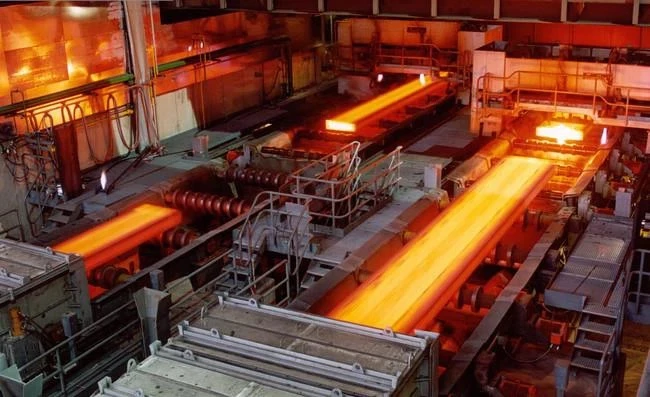
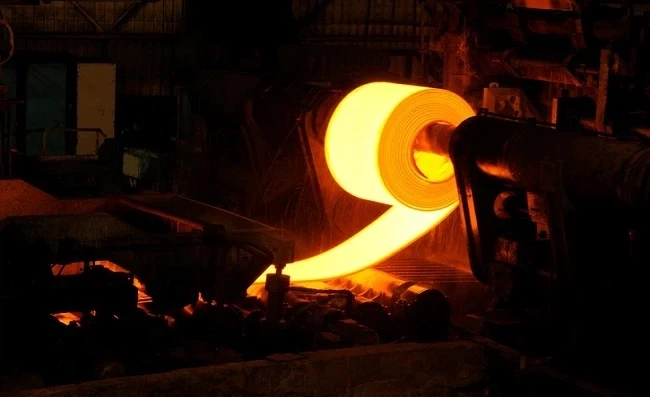
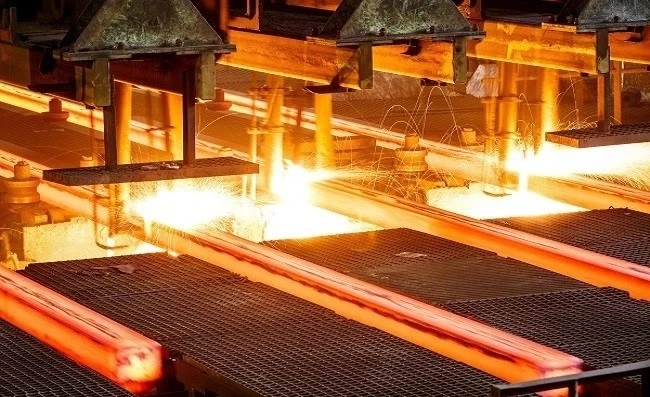
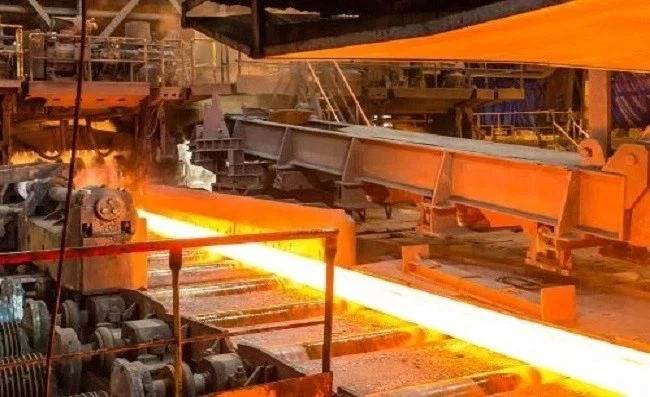
The final performance of API 5L Gr.B depends on hot rolling, normalized rolling, or TMCP controlled rolling and controlled cooling processes:
1. Hot Rolling/Normalized Rolling (for obtaining uniform microstructure and optimal mechanical properties):
Roll at 1050-1150°C, perform controlled rolling in the 800-900°C finishing temperature range, followed by air cooling. A uniform and fine ferrite + pearlite microstructure is obtained, ensuring a good match of strength and toughness.
2. Post-weld Heat Treatment (if required):
If stress relief is required after pipe ring weld welding, post-weld heat treatment at 550-650°C for 1-2 hours can be performed. Post-weld heat treatment should pay attention to controlling the heating and cooling rates to avoid affecting the microstructure and properties of the base material.
Important Reminder:
In conventional oil and gas transmission environments without H₂S, stress relief heat treatment is typically not required after welding.
For pipelines in an acidic environment (containing H₂S), strict compliance with Appendix J of API 5L PSL2 is required to prevent excessive hardness caused by improper post-weld heat treatment.
During welding, strict control of heat input and interpass temperature is required to prevent grain coarsening in the heat-affected zone.
API 5L Gr.B (L245) is suitable for medium and low-pressure oil and gas transmission, urban pipeline networks, and structural pipe applications. It is recommended for use in the following areas:
Application Fields
-
Oil and Natural Gas Gathering and Transportation
● Internal oilfield gathering and transportation pipelines
● Gas field raw gas gathering and transportation pipeline
● Long-distance pipeline branch lines, distribution pipelines -
Urban gas pipeline network
● Medium and high-pressure gas transmission and distribution pipeline network
● Inlet and outlet pipelines of urban gas pressure regulating stations -
Water Conveyance and Irrigation Engineering
● Long-distance water transmission pipeline
● Agricultural irrigation main channel supporting pipelines -
Chemical Engineering and Industrial Piping
● Chemical plant process pipelines
● Power station circulating water pipe
● Industrial cooling water system -
Structural Tubing
● Building steel structure support pipes
● Offshore Platform Jacket (Non-Corrosive Areas)
● Pipes for bridge pile foundations
● Transmission line tower structural pipe
Delivery and Customization
We offer flexible and reliable supply chain solutions to ensure you receive API 5L Gr.B line pipe that perfectly matches your project requirements.
|
Form |
 Seamless Steel
Pipe |
 Straight Seam Resistance
Welded Pipe (ERW) |
 Spiral Submerged Arc
Welded Pipe (SSAW) |
 Straight Seam Submerged Arc
Welded Pipe (LSAW) |
|---|---|---|---|---|
|
Conventional Range |
Outer Diameter: 21.3 - 1067 mm; |
Outer Diameter: 21.3 - 610 mm; Wall Thickness: 2 - 20 mm |
Outer Diameter: 219 - 2500 mm; Wall Thickness: 6 - 25 mm |
Outer Diameter: 406 - 1620 mm; Wall Thickness: 6 - 50 mm |
|
Customization Capability |
Hot-rolled seamless pipes, fixed-length cutting, bevel machining, pipe end threads, special heat treatment conditions |
High-frequency straight-seam welded pipes, fixed-length cutting, bevel processing, galvanization/plastic coating treatment |
Large-diameter spiral welded pipes, fixed-length cutting, bevel processing, anti-corrosion coating (FBE/3PE) |
JCOE/UOE forming, length cutting, bevel machining, special pipe end treatment |
Why Choose Us? - Reliable Engineering Technology. Dependable Delivery.
We are not just a supplier, but a trusted materials partner for you in China.

Vertically Integrated Production
Own 20,000㎡ facility with 10+ automated lines (8,000+ tons/year). In-house tooling & die center enables rapid customization and effective cost control - no middleman markup.

Strict Quality Control at Every Stage
Full traceability across key QC checkpoints throughout production. 100% compliant with ASTM/ASME, EN, and GB standards. Material test reports available with every shipment.

Reliable Delivery & Export Packaging
10+ years exporting to Europe, North America, Southeast Asia & Middle East with waterproof and anti-rust protection, combined with flexible shipping options ensures safe and on-time arrival.

Sample Validation Before Mass Production
We provide free samples for quality verification, allowing you to place bulk orders only after approval. We ensure consistency from sample to mass production by accurate dimensional measurement and transparent manufacturing.
FAQ
Q: What are the main advantages of API 5L Gr.B?
Q: What are the differences between API 5L Gr.B PSL1 and PSL2? How to choose between them?
Q: What are the differences between API 5L Gr.B, X42, X52, and X60? How to choose among them?
Q: What is the maximum operating temperature for API 5L Gr.B?
Q: What is the welding performance of API 5L Gr.B?
Q: What is the corrosion resistance of API 5L Gr.B?
Q: Can API 5L Gr.B replace ASTM A53 Gr.B?
Hot Tags: api 5l grade b, China api 5l grade b manufacturers, suppliers, factory


